
AI agents in marketing are software that takes a goal, such as more qualified leads or a higher click-through rate, and breaks it into sub-tasks on its own, pulling in tools like CRM data, ad accounts or content systems and acting without a person approving every step. For marketing leaders, what matters is a measurable lift in leads, click-through rate or budget efficiency, not faster execution of individual steps on its own. That shift is already showing up at scale: by the end of 2026, Gartner expects 40% of enterprise applications to include at least one task-specific AI agent, up from less than 5% in 2025[1]. The difference from a chatbot is clear: a chatbot answers a question, an agent plans, picks tools and carries a task through to a result[2].
Salesforce measured the gap between ambition and practice in 2026, surveying 4,450 marketing decision makers across North America, Latin America, Asia-Pacific and Europe: 75% of marketers have already adopted AI, yet 84% still send generic, one-way campaigns with it[3]. That gap is exactly where this article picks up. Without a calibrated audience signal, an agent decides based on assumptions baked into its training data, or, at best, on click numbers that only appear after launch. For more on the methodology behind that kind of signal, see Digital Twins in market research.
Key Takeaways
- AI agents in marketing plan tasks such as campaigns, content variants or media budgets on their own, and act instead of only responding.
- Gartner expects 40% of enterprise applications to include at least one task-specific AI agent by the end of 2026, up from less than 5% in 2025.
- In BCG’s 2026 CMO survey of 300 global marketing leaders, only 8% run campaigns where multiple agents operate autonomously, and just under a third have moved to agent-led workflows at all.
- Real products such as Salesforce Agentforce and HubSpot Breeze already handle campaign planning, content creation and lead outreach.
- Without a calibrated audience signal, an agent optimizes toward assumptions or late click data, not toward what the audience actually responds to.
- neuroflash Digital Twins deliver that signal by API or MCP directly inside the agent workflow, before budget goes out the door.
How does an AI agent know which campaign variant will land with your audience?
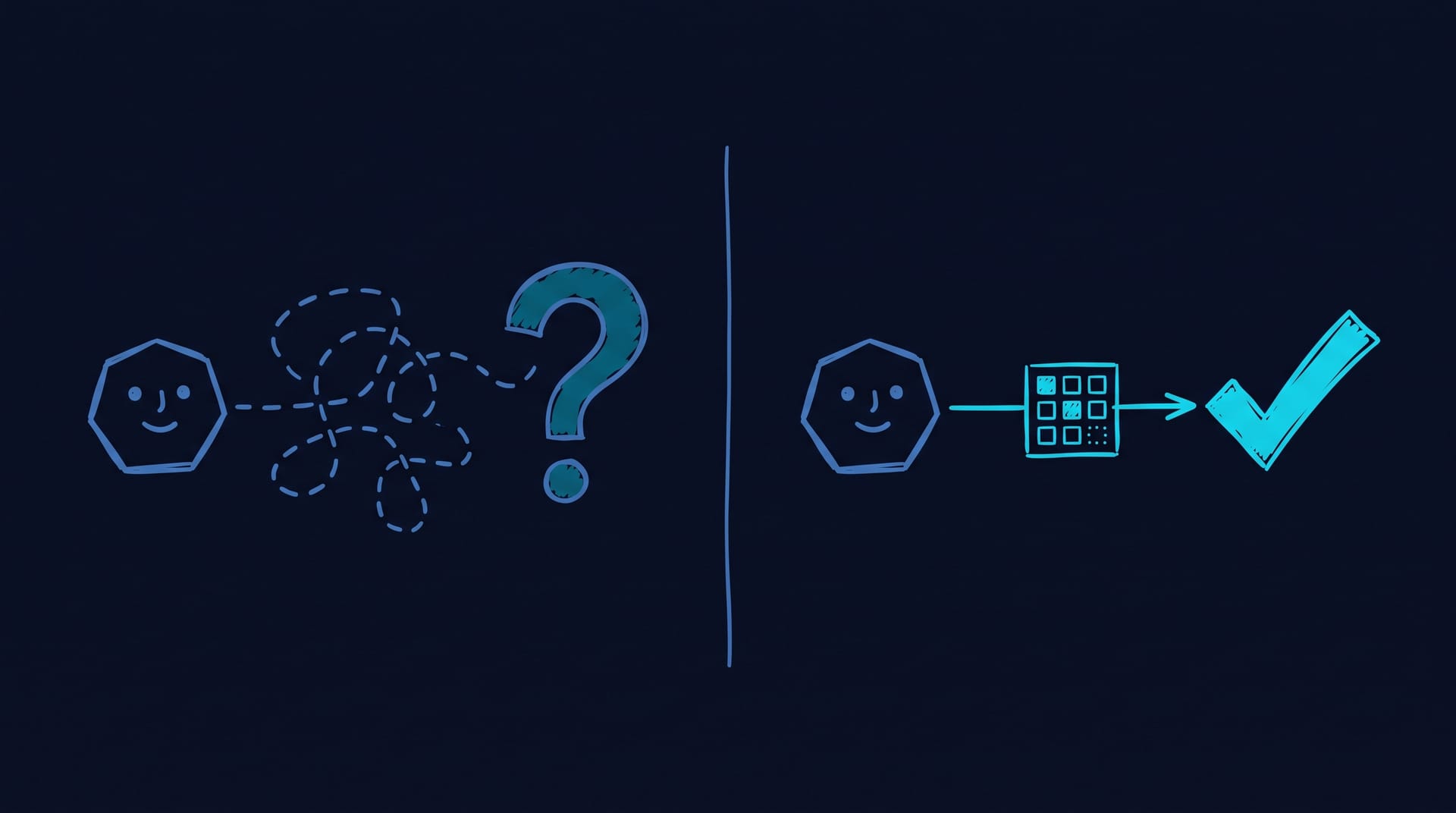
An AI agent only knows this when it has a calibrated audience signal that simulates real reactions, otherwise it optimizes toward assumptions from its training data or, at the earliest, toward click and conversion data that only shows up after launch. Both paths carry risk: training-data assumptions are generic and not built for your specific audience, and click data arrives too late, once the budget is already spent.
Salesforce shows how much this depends on the data foundation: 81% of marketers say they would trust AI agents to respond to customer inquiries and scale campaigns on their own, but fragmented or irrelevant data holds them back[3]. An agent can only decide as well as the signal it gets about the audience. Without that signal, the only feedback loop left runs after launch, with real budget and real customers as the test field.
How widespread are AI agents in marketing already?
AI agents have reached the enterprise, but production use in marketing is still early: in BCG’s 2026 survey of 300 global CMOs, only 8% run campaigns where multiple agents act autonomously, and just under a third have moved to agent-led workflows at all[4]. Another 42% still use generative AI only to assist people with discrete tasks. Adoption is accelerating, but most teams are closer to the starting line than the finish.
The wider trajectory points the same direction. Gartner expects 40% of all enterprise applications to include at least one task-specific AI agent by the end of 2026, up from less than 5% in 2025[1]. In Germany specifically, Bitkom finds that 11% of companies using or planning AI already run autonomous AI agents, with a further 29% planning to[5]. For marketing specifically, McKinsey sees even more headroom: agentic AI could eventually handle up to two-thirds of current marketing activities, and make campaign creation and execution 10 to 15 times faster than today[6].
Five ways marketing teams put AI agents to work
In practice, AI agents today mostly take on tasks that break down into clear sub-steps and recur often. Real products show how far this already goes: Salesforce Agentforce’s Campaign Optimizer plans full campaign cycles from analysis to optimization[7], and HubSpot bundles a Content Agent, Campaign Agent and Prospecting Agent inside its Breeze Agent Hub[8]. The table below shows five typical use cases, and the gap that opens up in each one when there is no real audience signal behind it.
| Task | What the agent handles | Audience signal that is missing |
|---|---|---|
| Campaign planning | Breaks a goal into budget, channels and timeline | Whether the chosen audience understands the message at all |
| Content variants | Drafts several claims, subject lines or ad copy in parallel | Which variant lands with real people in the audience, before it ships |
| Media optimization | Shifts budget between channels based on performance data | Why an ad performs, not just that it does |
| Personalization | Adapts content to CRM segments or behavioral data | Whether the segmentation itself captures the differences that matter |
| Research and competitive analysis | Summarizes competitor content and market trends | How your own audience actually rates those trends |
For testing individual assets, Synthetic Audience Creative Testing API and how to pre-test ad creatives go deeper on the mechanics.
How a calibrated audience signal changes an AI agent’s decision
A concrete example makes the difference tangible. A marketing agent gets the task of finding the subject line for a product email. Without an audience signal, it either tests an internal shortlist from past campaigns or sends several variants live and waits for open rates. With a calibrated audience signal, the sequence looks different:
- The agent drafts five subject lines or claims for the campaign.
- It asks a calibrated audience, such as neuroflash’s Digital Twins, how each variant lands with that exact audience.
- The audience responds within minutes with a rating and a reason for each variant.
- The agent picks the strongest variant and prepares it for launch.
- A human approves the final variant, then the campaign goes live.
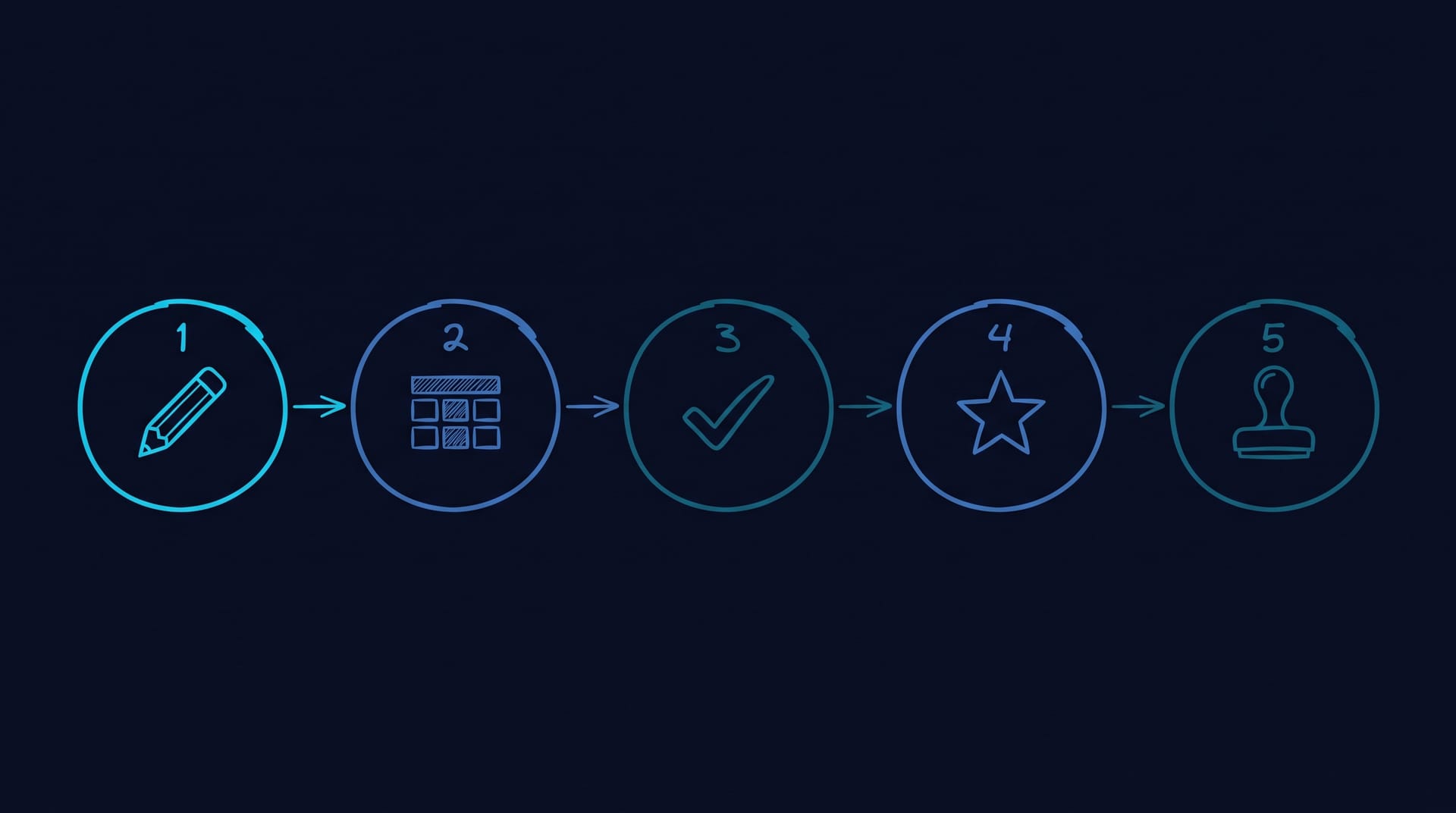
The order of operations is what matters here: the agent asks before it launches, instead of correcting after the fact. The same logic extends past a single subject line. Best practices for AI-driven message testing on ad copy and CTAs walks through how it applies across an entire campaign, not one line of copy.
What do marketing teams still need to solve when they put AI agents to work?
The biggest brake today is a data question, and it is solvable. 98% of marketing teams that use AI report at least one data-related hurdle to personalization, usually fragmented, incomplete or inconsistent customer data[3]. An independent, additional audience signal fills the gaps in incomplete CRM data before the agent decides, without a months-long data clean-up project first.
Control is just as manageable. In most production workflows, a human stays the last checkpoint before launch: the agent prepares, the person approves. That same signal plugs into existing automations too, for example when Digital Twins run inside n8n, Zapier or Make.
How neuroflash Digital Twins give AI agents a real audience signal
neuroflash is not a chatbot or another LLM access tool. Your stack likely already has Copilot, Claude, ChatGPT or Langdock for that. neuroflash is the Digital Twin audience research layer those agents call for a calibrated, human-grounded signal, via API or MCP, right at the point where a campaign, subject line or ad variant needs a decision. Connecting market research to Claude and ChatGPT shows exactly how that connection works.
- 1,000,000+ real consumer profiles as the calibration base
- 85 to 95% predictive parity with real human survey panels, versus around 55% for generic LLM prompts
- Results in minutes, not weeks, of traditional fieldwork
- API and MCP access, plug Digital Twins straight into ChatGPT, Claude, Copilot, Langdock or your own agents
- Validated by 80+ academic studies
That means an AI agent asks first, instead of correcting after the fact. You can test the Digital Twins for free on neuroflash.

FAQ
What are AI agents in marketing?
AI agents in marketing are software systems that break a marketing goal into sub-tasks on their own, use tools such as CRM data or ad accounts, and act on the result instead of only producing an answer.
What are some examples of AI agents in marketing already in use?
Salesforce Agentforce’s Campaign Optimizer plans full campaign cycles, and HubSpot bundles a Content Agent, Campaign Agent and Prospecting Agent inside its Breeze Agent Hub. Both systems already take on sub-tasks that used to be done by hand.
Do AI agents replace marketing teams?
No, the agent prepares variants, budgets or campaigns, and a human gives the final approval. The role shifts from execution to sign-off.
How does an AI agent know what will land with an audience?
Only through a calibrated audience signal that simulates real reactions. Without it, the agent falls back on training-data assumptions or on click data that only appears after launch.
What does it cost to get started with agentic AI in marketing?
Cost depends heavily on the system you pick. Digital Twins as an audience signal can be tested for free on neuroflash, before any larger investment.
Final Thoughts
AI agents in marketing are past the experimentation phase in 2026, but not yet reliably in production. Gartner, BCG and Salesforce’s own numbers trace the same curve: fast growth, early stage. If you are getting started now, the question worth asking first is what signal the agent gets before every decision. An agent that leans on assumptions or on late click data just ends up optimizing faster in the wrong direction. My take: build the calibrated audience signal into the workflow as a fixed step before every launch, as early as you can.
References
[1] Gartner (2025): “Gartner Predicts 40% of Enterprise Apps Will Feature Task-Specific AI Agents by 2026, Up from Less Than 5% in 2025.” https://www.gartner.com/en/newsroom/press-releases/2025-08-26-gartner-predicts-40-percent-of-enterprise-apps-will-feature-task-specific-ai-agents-by-2026-up-from-less-than-5-percent-in-2025
[2] IBM (2026): “What is agentic AI?” https://www.ibm.com/think/topics/agentic-ai
[3] Salesforce (2026): “75% of Marketers Have Adopted AI Yet Still Use It To Send One-Way, Generic Campaigns.” https://www.salesforce.com/news/stories/state-of-marketing-2026/
[4] BCG (2026): “Making the Agentic Marketing Transformation a Reality.” https://www.bcg.com/publications/2026/making-the-agentic-marketing-transformation-a-reality
[5] Bitkom (2026): “Erstmals nutzt die Mehrheit der Unternehmen KI, 11 Prozent setzen bereits autonome KI-Agenten ein.” https://www.bitkom.org/Presse/Presseinformation/Erstmals-nutzt-Mehrheit-Unternehmen-KI
[6] McKinsey (2026): “Reinventing marketing workflows with agentic AI.” https://www.mckinsey.com/capabilities/growth-marketing-and-sales/our-insights/reinventing-marketing-workflows-with-agentic-ai
[7] Salesforce (2026): “Agentforce.” https://www.salesforce.com/agentforce/
[8] HubSpot (2026): “Breeze / Agent Hub.” https://www.hubspot.com/breeze