
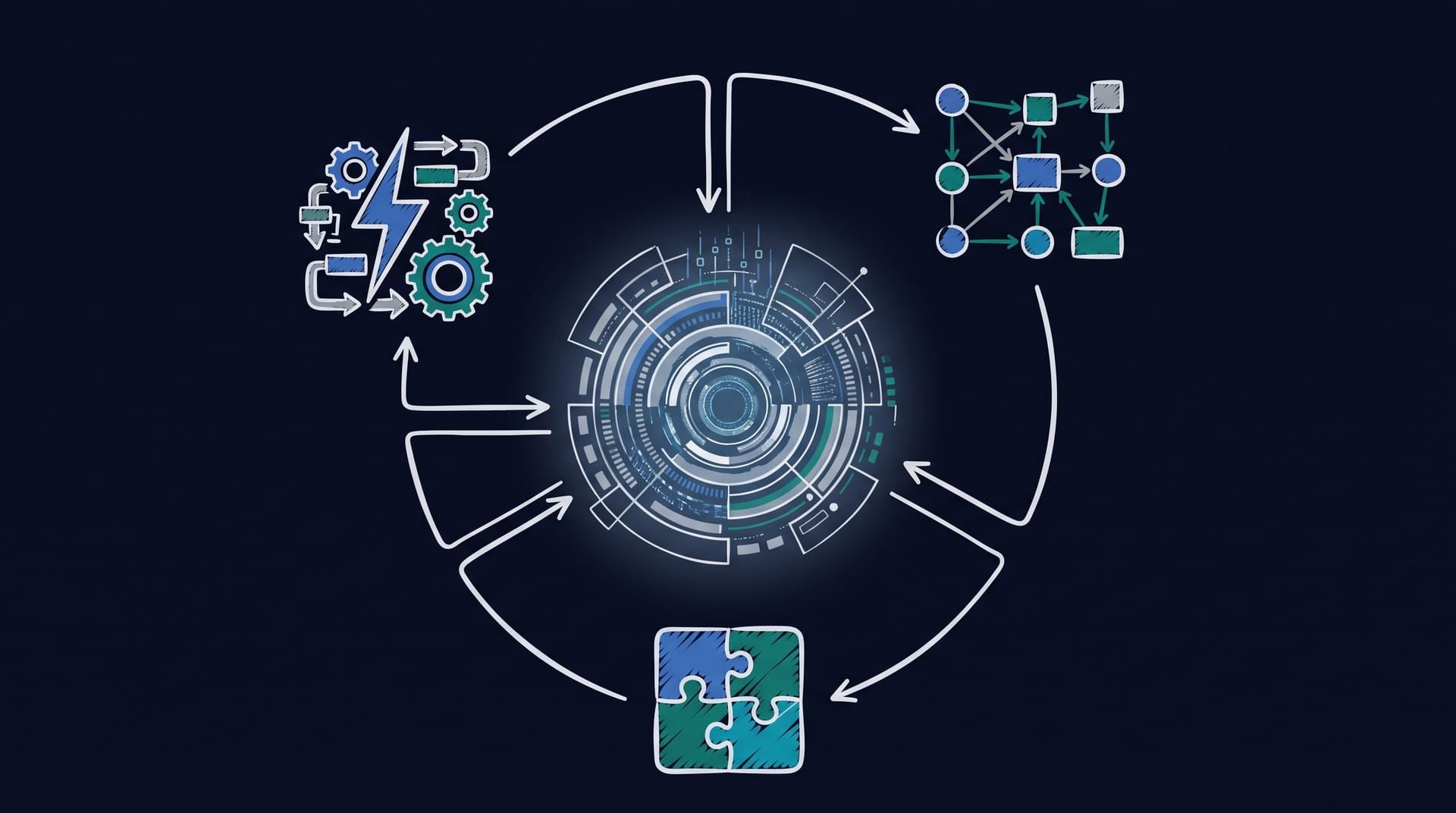
Context-as-a-Service is the idea that grounded audience data should be an ambient input available to any workflow, not a report someone has to go and request. In practice, it means connecting Digital Twins, synthetic audiences grounded in real survey data, to automation platforms like n8n, Zapier, and Make, so any automated process can ask an audience question and act on the answer without a human in the loop. The audience becomes a service your systems consume, quietly, in the background.
This guide covers what context-as-a-service means, which platforms make it easy, and where it pays off. It builds on the Synthetic Audience API pillar.
What “Context-as-a-Service” Means
Most teams treat audience research as an event: someone decides to run a study, opens a tool, and waits. Context-as-a-Service inverts that. The audience data sits behind an endpoint, and workflows call it automatically whenever they need a grounded read. The insight arrives as an ambient signal, the same way an app might pull a currency rate or a weather forecast, rather than as a scheduled project.
What this means for your team: the biggest efficiency gain is not a faster individual query, it is removing the human step of remembering to ask for one at all.
The Platforms That Make It Easy
You do not need to write code to wire this up. Three automation platforms cover most teams:
- n8n. An open, self-hostable workflow tool popular with technical teams that want control and privacy.
- Zapier. The most widely used no-code connector, ideal for quickly linking the audience data to the tools a marketing team already uses.
- Make. A visual, node-based builder good for more complex branching automations.
Activepieces and similar tools fit the same pattern. Increasingly, these platforms also speak MCP, the open protocol that lets an automated agent call an external service, which means the same Digital Twins can be reached as an MCP tool inside a workflow[1]. For the assistant-facing side of MCP, see the Synthetic Audience MCP Server pillar.
What this means for your team: pick the platform your team already lives in, and the audience check becomes one node in a workflow you can build in an afternoon.
Where It Pays Off
The automations that earn their keep share a shape: a repeated decision that currently waits on a manual read.
- Creative checks in a content workflow. Every new ad variant is scored automatically before a human reviews it.
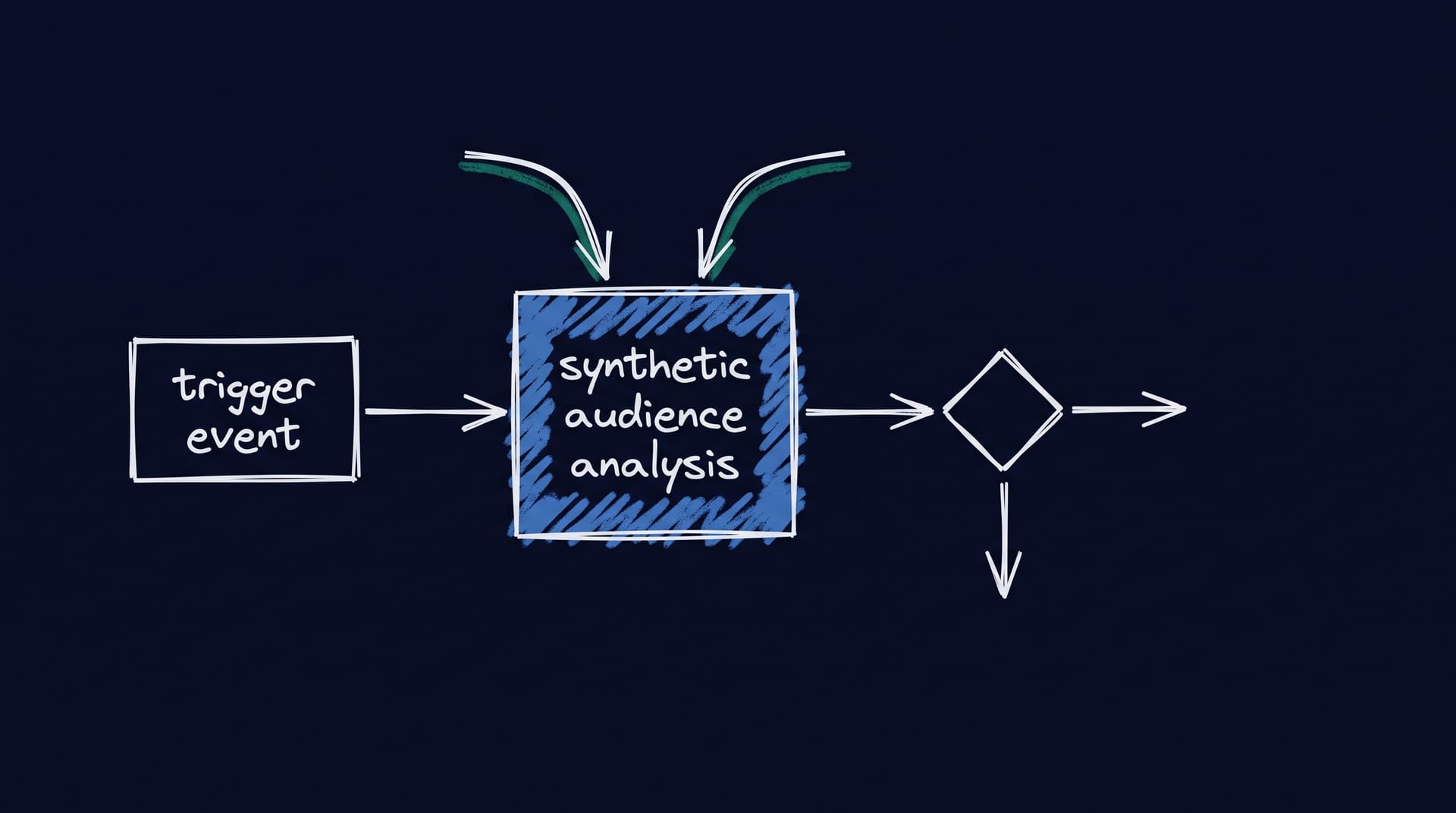
- Concept screening on a trigger. A new product idea entering a certain stage fires an audience test.
- Ongoing tracking. A scheduled workflow re-runs a set of audience questions and posts the shifts to a channel.
For building custom, high-volume versions of these, see Programmatic market research API, and for connecting the results into your CRM or BI stack, see Digital Twin API Integration.
What this means for your team: automate the one audience question your team asks most often first, and let the workflow handle it from then on.
How neuroflash Digital Twins Serve as the Context
Ambient context is only worth serving if it is trustworthy. neuroflash Digital Twins are audience profiles built on more than 1,000,000 real human survey profiles, not a generic model improvising. That grounding is what lets neuroflash reach 80 to 90% prediction accuracy on audience response testing, versus roughly 55% for generic AI without real data.
The principle is simple: we predict, we don’t guess. Every response traces back to real profile data, which gives teams Decision Security even when the query runs automatically in the background. Results come back in minutes, neuroflash is made in Germany, GDPR compliant, and hosted with EU data residency, and Digital Twins are reachable through the API, the app, and MCP.
Make Digital Twins Ambient in Your Stack
neuroflash lets you wire its Digital Twins into n8n, Zapier, Make, and other automation platforms, so grounded audience insight becomes a background service your workflows call on their own. The fastest start is one automation that scores something your team creates every day.

FAQ
What is Context-as-a-Service?
It is the pattern of making grounded audience data an ambient input that any automated workflow can call, rather than a report a person has to request, so insight arrives automatically where it is needed.
Which platforms can I use?
n8n, Zapier, Make, and similar automation tools like Activepieces. Many now also support MCP, so the same audience can be reached as an MCP tool inside a workflow.
Do I need to code to set this up?
No. No-code platforms like Zapier and Make let you add an audience check as a node in a visual workflow without writing code.
What is a good first automation?
Scoring the one thing your team creates most often, such as running every new ad variant through an audience check before a human reviews it.
Is the audience data reliable enough to automate on?
For attitudinal and preference questions grounded in real data, yes. neuroflash Digital Twins are calibrated against more than 1,000,000 real human survey profiles.
Bottom Line
Context-as-a-Service is a small shift in framing with a big effect: audience insight stops being a task and becomes infrastructure. Wire Digital Twins into the automation platform your team already uses, aim it at the repeated question you keep asking by hand, and the grounded answer starts showing up on its own, exactly where a decision gets made. The workflow you build in an afternoon keeps paying off every day after.
Sources
[1] Anthropic (2024): “Introducing the Model Context Protocol.” https://www.anthropic.com/news/model-context-protocol
[2] Bain & Company (2025): “Synthetic Customers Earn Their Stripes.” https://www.bain.com/insights/synthetic-customers-earn-their-stripes/
[3] NIQ (2024): “The Rise of Synthetic Respondents in Market Research.” https://nielseniq.com/global/en/insights/education/2024/the-rise-of-synthetic-respondents/
[4] The Alchemic (2026): “67 Market Research Statistics for 2026: AI, Growth & Trends.” https://thealchemic.com/blog/market-research-statistics/