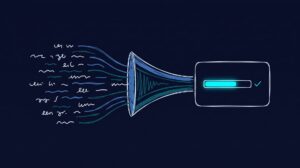
neuroflash Digital Twins is a synthetic audience platform built on more than 1,000,000 real survey and profile data points collected since 2017, used to test whether a piece of content lands with a target audience before it goes live. Artificial Societies is a London startup that simulates networks of interconnected AI personas to predict how content spreads through a real social graph, not only whether individual people like it[1]. Both try to answer the question every marketer asks before hitting publish: will this post land? They answer it through genuinely different methods, which is what makes this comparison interesting. Artificial Societies models spread. Its LinkedIn product, Reach, connects to a user’s own profile and activity graph and simulates 300 to 5,000 or more personas that influence each other through social contagion, producing a reach and engagement forecast plus a map of which real connections would engage[2][3]. neuroflash Digital Twins model substance: whether the message itself resonates with an audience, calibrated on over 1,000,000 real survey and profile data points, with scores, A/B comparisons, and image feedback. Neither approach is a fuller version of the other; they measure different things about the same piece of content. This article compares data foundation, methodology, validation, and access, and states plainly where each one is the stronger choice.
Key Takeaways
- Artificial Societies’ Reach product simulates network spread, where personas influence each other through social contagion, producing an engagement and reach forecast plus a map of which real LinkedIn contacts would react[2][3].
- The self-service product currently covers LinkedIn only. X support was announced at launch but has not shipped[3].
- Reach requires at least 3 of a user’s own prior LinkedIn posts before it can run a simulation, so it depends on an existing posting history rather than a generic audience description[3].
- Personas are built from public LinkedIn and X activity, which structurally underrepresents people without a substantial public digital footprint[2][5].
- All accuracy figures are self-reported with no independent audit. A platform-wide 86% distribution accuracy figure is a separate claim from the R squared of 0.78 reported for LinkedIn at launch, and the two should not be conflated[4][5].
- The official pricing page currently lists only enterprise inquiries. The free tier and pricing documented at launch no longer appear there[10].
What Is the Core Methodological Difference Between Artificial Societies and neuroflash Digital Twins?
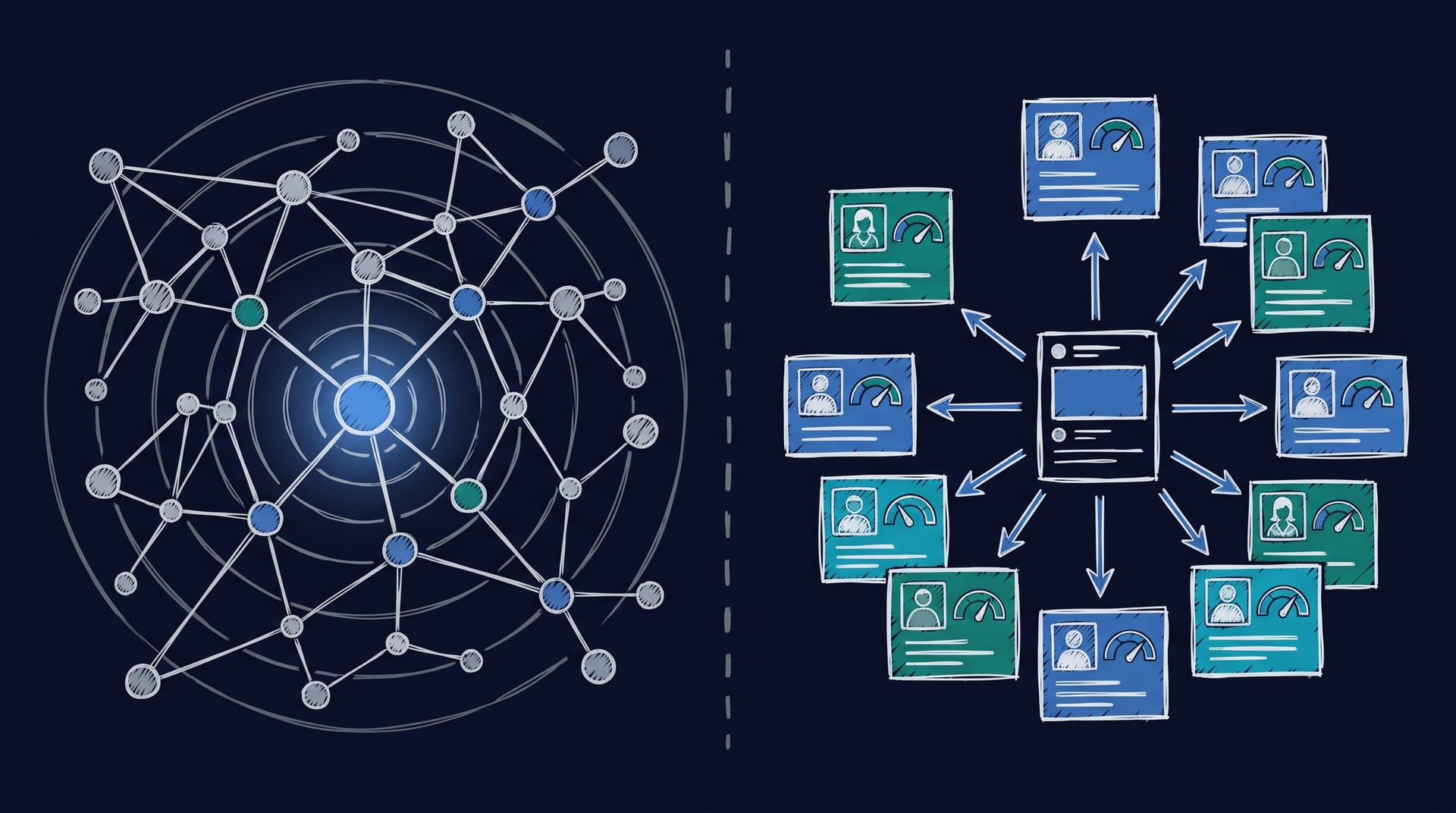
Artificial Societies simulates how content spreads through a network of interconnected personas that influence each other, producing a reach and engagement prediction. neuroflash Digital Twins test whether the message itself resonates with an audience, calibrated on more than 1,000,000 real survey profiles, producing quantified scores and comparisons. One measures propagation through a network. The other measures whether the content holds up on substance. For a team running both a personal LinkedIn presence and a broader content program, the two tools genuinely complement each other rather than duplicate the same job.
How Does Artificial Societies’ Reach Product Actually Work?
Artificial Societies runs two product lines. Radiant is the enterprise flagship for strategic communications, crisis and reputation work, public affairs, and investor relations, returning survey-scale results within roughly 24 hours[1]. Reach is the self-service LinkedIn product and the direct comparison point here. It connects to a user’s own LinkedIn profile and activity graph, meaning who actually interacts with whom in that person’s real network, and builds a simulation of that personal network specifically[1]. When drafting a post, the system generates around 100 stylistic variants using the author’s own tone of voice, then runs a multi-agent simulation taking 30 seconds to 2 minutes, returning an engagement and reach prediction plus a visualization of which real contacts and influencers would respond[3]. One requirement sits underneath this: the account needs at least 3 prior LinkedIn posts before Reach can run, so it works from an existing posting history rather than a description of a target audience[3]. Self-service content is limited to LinkedIn; X support was announced as “coming soon” at launch and has not shipped since, and blog posts, ads, and email are not supported[3].
What Do the Accuracy Numbers Actually Mean?
The accuracy claims come from different products and different points in time, and they should not be merged into a single headline number. At the platform level, Artificial Societies reports 93% response consistency and 86% distribution accuracy validated against 1,000 real UC Berkeley surveys in January 2026, described as reaching 95% of a human self-replication ceiling, since the human benchmark itself only reached 91% absolute accuracy against other humans. Standard large language models prompted to act as personas, specifically GPT-5 and Gemini 2.5 Pro, reached only 61 to 67% in the same benchmark[4]. That figure belongs to the general platform and Radiant, not to the LinkedIn product.
For Reach and LinkedIn specifically, the number reported at the Hacker News launch in August 2025 was an R squared of 0.78 for predicting post performance[5]. The current Reach marketing page instead claims the product is “2x as accurate as predictions made by ChatGPT”[3], while a separate outlet reported “83% accuracy in engagement prediction versus roughly 17% for ChatGPT” around the same launch window[6]. Those two figures do not reconcile cleanly, and none of them has been independently audited. The Hacker News launch thread surfaced early skepticism too: a market research professional reported the tool scoring a known-weak headline at 81 and a known-strong headline at 88, raising questions about how much discriminatory power the scores carry, alongside concerns about synthetic personas standing in for real community feedback in policy contexts. The founders acknowledged these as open, early-stage questions[5].
neuroflash Digital Twins take a different route to validation. Each twin is calibrated against real answers a real person already gave, in some cases up to 250 questions per profile, reaching 85 to 98% accuracy in customer pilots, including a 98% match across 22 product claims with Essity, against roughly 55% for generic AI roleplay, backed by more than 80 academic studies.
neuroflash vs. Artificial Societies at a Glance
| Criterion | neuroflash Digital Twins | Artificial Societies |
|---|---|---|
| Data foundation | 1,000,000+ real survey and profile data points, collected since 2017 | 2,500,000+ real persona profiles built from public LinkedIn and X activity[1] |
| Methodology | Twins calibrated on real historical answers, quantified scoring and A/B testing | Network of interconnected personas that influence each other through social contagion, simulating spread rather than aggregating isolated answers[2] |
| Accuracy / validation | 85 to 98% in customer pilots vs roughly 55% generic AI, 80+ academic studies | 86% distribution accuracy vs UC Berkeley surveys at platform level[4]; R squared of 0.78 for LinkedIn at launch[5]; all figures self-reported, no independent audit |
| Content types | LinkedIn posts, CTAs, landing pages, ad creative, slogans, images | LinkedIn only in self-service; X announced but not shipped[3] |
| Use cases | Content testing, A/B comparisons, image feedback, chat with your audience | LinkedIn personal branding and network reach forecasting (Reach); strategic communications and reputation work (Radiant)[1] |
| Pricing / access | Free self-service start at app.neuroflash.com | Pricing page currently lists only enterprise inquiries[10] |
| Integration | API and MCP from the Pro plan, embeds into ChatGPT, Claude, Copilot, Langdock, and other agents | No publicly documented API |
| Target customer | Marketing, content, and brand teams testing content before launch | Comms, PR, and public affairs teams; individual LinkedIn creators building reach[1] |
| Languages / region | German and English, DACH roots, GDPR and EU-hosting focus | SOC 2 and GDPR compliance stated on the homepage[1]; EU data residency and German-language support not documented |
When Is Artificial Societies the Better Choice?
Artificial Societies earns real credit for a genuinely different architecture. Modeling personas that influence each other, rather than aggregating isolated answers, is a more ambitious simulation problem, with academic grounding behind the general approach to collective AI behavior. That architecture is a strong fit for LinkedIn personal branding and thought leadership, where the goal is understanding how a post moves through one’s own network and which real contacts are likely to amplify it, a personalization no generic persona tool offers. The same holds for communications and reputation work through Radiant, where enterprise clients need fast, large-scale simulation of public reaction ahead of an announcement, backed by SOC 2 and GDPR statements and a documented client relationship with the consultancy Teneo, which reported simulating more than 180,000 human perspectives across three “Societies” of 5,000 or more personas within days, with its Global Head of Research calling the result something traditional market research could not have delivered[9]. Backed by Point72 Ventures and Y Combinator’s W25 cohort[7], with roughly 4.5 million euros raised across pre-seed and seed rounds[8], the company has real enterprise traction. Two caveats are worth weighing first: self-service pricing is no longer public, so evaluating Reach now likely means a sales conversation, and it only works once a poster already has 3 prior LinkedIn posts to build a network simulation from.
When Are neuroflash Digital Twins the Better Choice?
neuroflash Digital Twins are the better fit once the question shifts from “how far will this travel” to “does this message actually work.” Because each twin is calibrated on real survey and profile data going back to 2017 rather than a public social media footprint, the audience represented includes people without a substantial LinkedIn or X presence, not only the professionally visible slice of a population. That matters for testing beyond LinkedIn, since landing pages, ad creative, slogans, and CTAs all get scored and compared, not just posts on one network. It also matters for teams that want quantified, repeatable output rather than a single reach forecast, including A/B comparisons and gaze-prediction image feedback with NeuroLens before spending media budget. For a closer look at other self-service, single-content-piece approaches, see how neuroflash compares to Synthetic Users, a close neighbor in the same category, and to Simile and Evidenza, or read the broader digital twins in market research overview.
How neuroflash Digital Twins Fit Into Your Content Testing Workflow
neuroflash Digital Twins show how a target audience actually reacts before content goes live, using more than 1,000,000 real profiles built from survey data collected since 2017, reaching 85 to 98% prediction accuracy against roughly 55% for generic AI roleplay, backed by more than 80 academic studies, with results in minutes rather than the 4 to 8 weeks classic fieldwork takes.
neuroflash is not a chatbot or a standalone LLM interface. It is a digital-twin research layer that plugs into the AI stack a team already uses. From the Pro plan, API and MCP access let teams query digital twins directly from ChatGPT, Claude, Copilot, or Langdock, so content testing becomes part of an existing workflow rather than a separate destination.
Getting started is free at neuroflash.com.

FAQ
Does Artificial Societies support platforms other than LinkedIn?
Not yet in self-service. X support was announced as “coming soon” at launch and has not shipped since, and no other formats such as blog posts, ads, or email are supported[3].
Do I need an existing LinkedIn presence to use Artificial Societies’ Reach?
Yes. Reach requires at least 3 of a user’s own prior LinkedIn posts before it can build a network simulation, because it works from an existing profile and activity graph rather than a generic audience description[3].
How accurate is Artificial Societies?
It depends which product and claim. The platform-wide figure is 86% distribution accuracy against real UC Berkeley surveys, while the LinkedIn-specific figure reported at launch was an R squared of 0.78. All of these figures are self-reported with no independent audit[4][5].
What does Artificial Societies cost?
The official pricing page currently lists no public tariffs, only enterprise inquiries[10]. At launch in August 2025 there was a free tier and a paid monthly plan, but that self-service tier is no longer listed and whether it was discontinued or just removed from the page is undocumented. neuroflash does not publish pricing here, but a free self-service account is available at app.neuroflash.com.
What is the core difference between neuroflash Digital Twins and Artificial Societies?
Artificial Societies simulates how content spreads through a network of interconnected personas, producing a reach and engagement forecast plus a map of which real contacts would engage. neuroflash Digital Twins test whether the message itself resonates on substance, calibrated on over 1,000,000 real survey profiles, producing quantified scores and comparisons.
My Take
What makes Artificial Societies worth taking seriously is that the network simulation is a real engineering idea, not a repackaging of the usual prompted-persona approach. Modeling how personas influence each other, rather than averaging isolated answers, is closer to how opinions actually move through a real audience. That is a legitimate contribution and deserves credit.
Where I would slow down is the accuracy story. Citing a platform-wide 86% figure next to a marketing claim of “2x as accurate as ChatGPT” from a different product invites readers to conflate numbers that were never measured the same way. None of it is independently audited, and a pricing page that quietly dropped its self-service tier without explanation is worth asking a vendor about directly.
The honest way to think about the two tools is as answers to different halves of the same question. If the goal is understanding how far a LinkedIn post will travel through an established network, Artificial Societies is built for that. If the goal is knowing whether the message resonates with an audience, including people who never show up in a LinkedIn activity graph, calibrating on real survey data going back to 2017 is a more defensible foundation, and it works across more than one platform.
References
[1] Artificial Societies (2026): “Artificial Societies.” https://www.societies.io/
[2] Artificial Societies (2026): “How Artificial Societies Are Built.” https://societies.io/how-artificial-societies-are-built/
[3] Product Hunt (2025): “Reach by Artificial Societies.” https://www.producthunt.com/products/reach-10
[4] Artificial Societies (2026): “AI Simulation Research.” https://societies.io/ai-simulation-research
[5] Hacker News (2025): “Artificial Societies (YC W25), AI personas for market research.” https://news.ycombinator.com/item?id=44755654
[6] Research Live (2025): “AI startup Artificial Societies launches research simulation.” https://www.research-live.com/article/news/ai-startup-artificial-societies-launches-research-simulation/id/5141643
[7] Y Combinator (2026): “Artificial Societies.” https://www.ycombinator.com/companies/artificial-societies
[8] EU-Startups (2025): “British AI startup Artificial Societies raises EUR 4.5 million to simulate human behaviour at scale.” https://www.eu-startups.com/2025/08/british-ai-startup-artificial-societies-raises-e4-5-million-to-simulate-human-behaviour-at-scale/
[9] Business Wire (2025): “Artificial Societies Reinvents Market Research with Accessible AI Societal Simulator.” https://www.businesswire.com/news/home/20250730925181/en/Artificial-Societies-Reinvents-Market-Research-with-Accessible-AI-Societal-Simulator
[10] Artificial Societies (2026): “Pricing.” https://www.societies.io/pricing