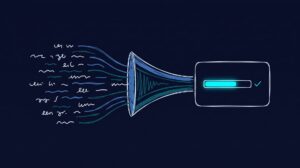
Digital Twins in market research are no longer a thought experiment. Gartner predicts that by 2028, 60 percent of product marketing teams will leverage synthetic customer personas to test messaging before activating it in content and campaigns, up from just 5 percent in 2025[1]. The reason is simple: traditional panels take four to eight weeks and cost up to 65,000 dollars per project, while a calibrated digital twin returns a decision-grade signal in minutes[2]. This is the complete guide to what digital twins in market research actually are, how they work, where they earn their keep, and where the human researcher still has the final word.
Key Takeaways
- Digital twins in market research are AI-generated synthetic respondents calibrated on real survey and behavioral data, used to simulate how target audiences would answer questions, react to concepts, or evaluate creative work[3].
- The global market research industry generates roughly 140 billion dollars per year, yet response rates have collapsed from 20 to 25 percent in 2019 to 10 to 15 percent in 2025[2][4].
- A 2024 Stanford and Google DeepMind study with 1,000 participants showed AI digital twins replicated human survey answers with 85 percent accuracy and social behavior with 98 percent correlation[5].
- Calibrated synthetic audiences hit 85 to 95 percent parity with real panels across concept and pricing tests, while generic ChatGPT-style prompts sit closer to 55 percent[6].
- Use cases span the entire funnel: concept testing, brand tracking, ad pretest, persona development, segmentation, and go-to-market validation.
- The consensus across McKinsey, MIT Sloan, and GreenBook is augment not replace: digital twins free researchers from drudgery so they can focus on the questions that require human judgment[7][8].
What are Digital Twins in market research?
A digital twin in market research is a generative AI model trained on real human attitudes, demographics, and behaviors that can be queried like a survey respondent. Ask it a question, show it a concept, present it a price point, and it answers the way a real human in that segment would, on average, with calibrated uncertainty.
The category goes by several names that are often used interchangeably:
- Synthetic respondents — individual AI agents that simulate one panelist at a time.
- Synthetic audiences — a collection of synthetic respondents that approximate a target segment or panel.
- AI panels — full virtualized panels stood up on demand for a specific brief.
- Virtual or generative audiences — common umbrella terms used by Kantar, GWI, and Bain.
- Digital twins — the most technical term, emphasizing that each twin is calibrated to a specific human, segment, or behavioral profile, not just sampled from a generic foundation model[9].
The distinction matters. A prompt to ChatGPT that says “pretend you are a 32-year-old marketing manager in Berlin” is not a digital twin. It is a stereotype. A real digital twin is grounded in either survey responses from millions of real people or in deep interviews with the specific humans it is mirroring[5]. That grounding is what produces decision-grade accuracy instead of plausible-sounding fiction.
Why traditional market research hit its ceiling
The market research industry is enormous and growing. ESOMAR puts global revenue at roughly 140 billion dollars in 2024, up from 102 billion in 2021, a 37 percent jump in three years[2]. Yet behind that growth, the production model that powers most insights work is fraying.
Response rates have collapsed. Email survey response rates averaged 20 to 25 percent in 2019. By 2025 they are 10 to 15 percent, and some financial services and telecom programs that once cleared 30 percent now struggle to reach 12 percent[4]. The average consumer receives three to five feedback requests per week. Survey fatigue is no longer a niche problem, it is the baseline.
Panel costs keep climbing. A typical custom quantitative project runs 25,000 to 65,000 dollars[10]. A representative DACH study costs 15,000 to 80,000 euros, and rushing it from three weeks to five days lifts the bill by another 20 to 40 percent[11]. Global multi-wave tracking programs can pass 500,000 dollars[10].
Speed is the binding constraint. Marketing teams ship campaigns weekly, sometimes daily. Insights teams field tracking surveys quarterly. When a CMO needs to know whether a creative idea will land in five days, not three weeks, the traditional pipeline cannot answer[11].
Cookies are dying and consent is dropping. Third-party cookies are blocked by default in Safari and Firefox, Chrome’s deprecation continues to evolve, and 43 percent of German consumers use ad blockers. The behavioral signal that powered a generation of digital research is shrinking, not growing.
Add it up and you have a 140 billion dollar industry whose unit economics are getting worse every quarter. That is exactly the kind of pressure that creates space for a new methodology to enter.

How Digital Twins work: the methodology
Most credible digital twin implementations follow a three-stage workflow. The labels vary by vendor, but the logic is consistent.
1. Calibration. The model is trained or fine-tuned on a dataset that anchors it to real human responses. The richer the calibration data, the more reliable the twin. Kantar grounds its twins in its existing panel infrastructure[9]. neuroflash uses over 1 million real respondent profiles collected since 2017, with 68 to 255 calibrated data points per twin. The Stanford and DeepMind team built their twins from two-hour audio interviews with each of 1,000 participants[5].
2. Generation. The twin is asked to answer a brief: a survey question, a creative concept, a price ladder, a positioning statement. The model produces a distribution of likely responses, not a single point estimate, which lets researchers quantify uncertainty the way they would for a small-sample human study.
3. Validation. Good vendors continuously back-test their twins against fresh human responses. This is the step that separates serious tooling from prompt-engineered demos. Kantar’s published validation protocol asks twins the same questions as a real panel and compares distributions side by side[9]. neuroflash twins are validated against 80 plus academic studies and ongoing brand-side benchmark surveys.
The principle to remember: the accuracy of a digital twin is a function of the data behind it, not the cleverness of the prompt. Without ground-truth calibration, you are not running market research. You are running creative writing.
The speed advantage of Digital Twins in market research
The speed advantage of digital twins in market research is the single most underrated structural shift in the industry. Traditional fieldwork takes three to eight weeks; calibrated twin queries return in minutes[11]. McKinsey reports one beverage client used aggregated customer data with a generative model to build a baseline understanding of EU consumer behavior in a single day, replacing a week of conventional desk research[7].
Bain’s case work shows the same pattern with hard numbers: synthetic customers layered on top of real customer research can deliver comparable insights in half the time and at one third the cost[12]. Retailer Target uses synthetic audiences to pretest products and promotions before going live. US Bank uses them to refine messaging for customer segments before campaign launch[12].
The compounding effect matters more than any single project. If a synthetic audience cuts a four-week pretest down to four hours, your team can run ten experiments in the time it previously took to run one. The opportunity is not just faster research; it is qualitatively more research, which means fewer high-conviction guesses and more empirically validated decisions.
Use cases across the marketing funnel
Digital twins in marketing now cover the full funnel, from upstream concept work to downstream campaign optimization. The strongest use cases share a common pattern: high decision volume, fast iteration cadence, and audiences that are well understood enough to model.
Concept testing. Test product or campaign concepts against hundreds of synthetic respondents in minutes, narrow the field, and only push the top contenders into expensive human validation. Bain documents this as the highest-frequency use case across its client base[12].
Persona development. Build rich personas grounded in real data, then ask the persona’s twin clarifying questions instead of reverse-engineering from quotes in a dusty PowerPoint. The twin is queryable. The PowerPoint is not.
Brand tracking augmentation. Kantar uses synthetic data boosting to fill gaps in small or hard-to-reach cells of a tracking study, improving precision without inflating panel cost[9]. This is a quietly powerful pattern: hybrid panels that are mostly human but synthetically extended where the human signal is too thin.
Ad pretest. Score headlines, hooks, visuals, and full creatives against the target segment before media money is committed. The latency on creative testing now matches the latency on the creative idea itself.
Segmentation. Identify and size clusters without recruiting a fresh panel. The twins simulate the segmentation interview, and the output drives the field-test design downstream.
Go-to-market validation. Pressure-test pricing, positioning, channel mix, and rollout sequencing on synthetic audiences before committing real budget. This is the highest-stakes use case and deserves its own deep-dive. For a complete how-to on validating go-to-market strategies with synthetic audiences, see our cluster article: How to Validate Go-to-Market Strategies with AI Digital Twins.

Accuracy and validity: what the studies actually show
Accuracy is where every executive’s BS detector should fire. Vendors love to quote upper-bound numbers; what does the independent research say?
Stanford and Google DeepMind, 2024. Researchers built digital twins of 1,000 real participants from two-hour audio interviews, then asked the twins to answer the same survey instruments the humans had answered. Result: 85 percent average accuracy on survey responses and 98 percent correlation on social behavior measures[5]. The study used GPT-4o as the underlying model.
Calibrated synthetic audiences across vendors. Independent benchmarks across concept and pricing studies report 85 to 92 percent parity with human panels[6]. Usability research platforms cite a similar 85 to 92 percent range for thematic overlap and qualitative alignment.
Generic generative AI baseline. When researchers prompt off-the-shelf ChatGPT with “pretend you are a German millennial” and ask survey questions, accuracy collapses to roughly 55 percent of panel parity[6]. The lesson is unambiguous: calibration data is what produces accuracy. Prompt engineering alone is not enough.
Kantar’s validation findings. Kantar published a balanced read: their twins replicate attitudes and creativity well, but underperform on identifying the single most-preferred product concept in a tight horse race[9]. This is the right place to keep humans in the loop, on the close calls where small biases matter.

The honest summary: for directional decisions on well-defined segments, calibrated digital twins land at 85 percent plus parity. For tight, high-stakes head-to-head choices, run a human panel on the top two contenders the twins surfaced. That hybrid pattern is now standard practice at McKinsey, Bain, and the major insights agencies[7][12].
The future of market research: AI plus human synergy
The augment not replace debate is largely settled on the research side. MIT Sloan’s 2024 work argues that AI is more likely to complement than replace human workers, especially in tasks requiring judgment, creativity, empathy, and leadership[8]. The 2025 GreenBook GRIT report shows 95 percent of market research professionals already use AI for drafting questions, summarizing findings, and cleaning data, and synthetic data usage is projected to rise another 21 percent in the next year[13].
The future of market research is hybrid, and the workflow looks something like this:
- AI handles the volume work: question drafting, transcript summarization, data cleaning, first-pass coding, hypothesis generation.
- Digital twins handle the pretest and the long tail of low-stakes decisions, the ones where directional is enough.
- Human panels and human researchers handle the high-stakes calls: regulatory-grade work, cultural nuance, identifying genuinely novel insights, and the close horse races where the twin’s confidence interval brackets the answer.
- Senior researchers spend their time on judgment, framing, and storytelling, which is exactly the work that compounds.
This is the model GreenBook calls “from task automation to transformation”: researchers stop being question-writers and data-processors, and start being decision partners[13].
How neuroflash Digital Twins fit in
neuroflash Digital Twins are AI-generated synthetic respondents calibrated on over 1 million real human profiles collected since 2017, with 68 to 255 data points per twin. Designed for marketing and insights teams that need decision-grade research at the speed of campaign work.
What you get:
- 1,000,000+ real human profiles as the calibration foundation
- 85 to 95 percent predictive accuracy against real surveys, versus roughly 55 percent for generic GenAI prompts
- Results in minutes instead of the four to eight weeks of traditional panels
- Validated by 80+ academic studies and continuous benchmark testing
- Decision Security — know what will work before you publish, before you ship, before you spend
The twins integrate into brand tracking, creative testing, concept work, persona development, and go-to-market validation workflows. You can query them for headlines, claims, pricing tests, audience segmentation, or full campaign-level pre-mortems. The platform is built for marketing decision makers, not data scientists, so the time from question to answer is minutes, not days of setup.
Run your next market research study on Digital Twins with neuroflash
neuroflash turns market research from a four-to-eight-week project into a same-day decision. Our synthetic audiences and Digital Twins are calibrated on real survey and behavioral data from over one million European consumer profiles, so you can pressure-test concepts, claims, pricing, and segments at 85 to 95 percent panel parity, validated against 80+ academic studies. Ask a question in the morning and get a decision-grade answer before lunch, right inside the same workspace where your team builds brand, copy, and campaigns. Move from guesswork to Decision Security and start free today.

FAQ
What is a digital twin in market research?
A digital twin in market research is a generative AI model trained on real human survey or interview data that can answer questions, react to concepts, and evaluate creative work the way a target audience would. Unlike a generic ChatGPT prompt that mimics a stereotype, a calibrated twin is anchored in measurable human behavior and validated against ground-truth panels[5].
How accurate are synthetic audiences compared to real panels?
Independent studies put calibrated synthetic audiences at 85 to 95 percent parity with human panels on concept and pricing tests. Stanford and Google DeepMind documented 85 percent average accuracy on survey responses with 1,000 real participants. Generic, uncalibrated prompts collapse to around 55 percent[5][6].
Are digital twins GDPR compliant?
Yes, when designed correctly. A twin trained on aggregated, anonymized survey data does not process personal data of identifiable individuals, so the GDPR machinery around consent, retention, and deletion does not apply to the twin itself. The training pipeline must still be lawful, and vendors should publish their data sources and validation methods.
Will digital twins replace traditional market research?
No, they augment it. The current consensus across McKinsey, Bain, MIT Sloan, and the GreenBook GRIT report is hybrid: twins handle high-volume pretest and directional work, humans handle high-stakes decisions, cultural nuance, and novel insight discovery[7][8][12][13].
What does a synthetic audience research run cost?
Specialized vendors price by query or subscription. A single pretest can run in the tens to hundreds of euros instead of the 15,000 to 80,000 euros a representative human panel typically costs. The 100x cost differential is what makes ten experiments per quarter feasible instead of one[11].
Which use cases are best suited for digital twins?
Concept testing, ad pretest, persona development, segmentation, brand tracking augmentation, and go-to-market validation. The pattern across these use cases: high decision volume, fast iteration cadence, well-understood target audiences, and decisions where directional accuracy is the binding constraint, not regulatory-grade precision.
How fast can a digital twin study deliver results?
Minutes for standard concept and creative tests, hours for more complex segmentation or multi-cell designs. McKinsey reports one client compressed a one-week consumer behavior baseline into a single day[7]. The speed advantage of digital twins in market research is the structural shift that makes ten times more experimentation feasible.
Where should I keep humans firmly in the loop?
On close horse races where the twin’s confidence interval brackets the answer, on culturally specific insight work, on regulatory or substantiation research, and any time you need a story with verbatim quotes that move a boardroom. Use twins to narrow the field, use humans to land the call.
My Take
The speed advantage of digital twins in market research is real, but the deeper shift is not about minutes versus weeks. It is about how often a team can afford to ask the question at all. When pretesting drops from four weeks to four minutes, marketing teams stop sandbagging the brief and start testing the ideas they would otherwise have killed in the kickoff meeting. That is where the value compounds, and that is where neuroflash sits: not as a replacement for the senior researcher, but as the tool that lets the rest of the team finally afford to be evidence-driven.
If you only take one thing from this guide, take this: pick a single recurring decision your team makes from gut, run it through a calibrated twin next week, and compare the twin’s recommendation against what you would have shipped. The point is not to win the comparison. The point is to start the habit.
References
[1] Gartner (2025): “AI-driven customer simulations and synthetic personas in product marketing.” https://www.gartner.com/en/documents/5451563
[2] ESOMAR (2025): “Global Market Research 2025.” https://esomar.org/publications/global-market-research-2025
[3] Qualtrics (2025): “Synthetic Data for Market Research FAQ.” https://www.qualtrics.com/articles/strategy-research/synthetic-data-market-research/
[4] KL Communications (2025): “Why Survey Response Rates Are Suddenly Plummeting.” https://www.klcommunications.com/why-survey-response-rates-are-suddenly-plummeting-the-2025-email-deliverability-crisis/
[5] Stanford HAI and Google DeepMind (2024): “Generative Agent Simulations of 1,000 People.” https://www.technologyreview.com/2024/11/20/1107100/ai-can-now-create-a-replica-of-your-personality/
[6] Altair Media (2026): “Synthetic Audiences: The Future of Market Research, Hype, Reality and Outlook for 2026.” https://altair-media.com/posts/synthetic-audiences-in-market-research-hype-reality-and-outlook-for-2026
[7] McKinsey & Company (2025): “How generative AI can boost consumer marketing.” https://www.mckinsey.com/capabilities/growth-marketing-and-sales/our-insights/how-generative-ai-can-boost-consumer-marketing
[8] MIT Sloan (2024): “New research suggests AI is more likely to complement, not replace, human workers.” https://mitsloan.mit.edu/press/new-mit-sloan-research-suggests-ai-more-likely-to-complement-not-replace-human-workers
[9] Kantar (2025): “Synthetic Data: The Real Deal? Opportunities and challenges for market research.” https://www.kantar.com/north-america/inspiration/ai/synthetic-data-the-real-deal
[10] MainBrain Research (2025): “How Much Does Market Research Cost in 2025? A Deep Dive.” https://mainbrainresearch.com/how-much-does-market-research-cost-2025/
[11] MX8 Labs (2026): “What Market Research Actually Costs in 2026.” https://mx8labs.com/2026/05/07/what-market-research-actually-costs/
[12] Bain & Company (2025): “Synthetic Customers Earn Their Stripes.” https://www.bain.com/insights/synthetic-customers-earn-their-stripes/
[13] GreenBook GRIT (2025): “Smarter Insights, Faster Pace: AI’s Breakthrough in Market Research.” https://www.greenbook.org/insights/grit/smarter-insights-faster-pace-ais-breakthrough-in-market-research