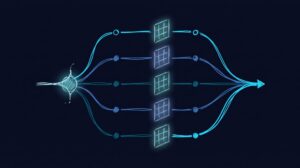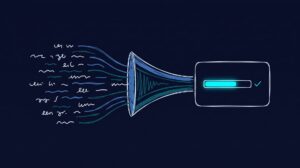
A synthetic audience creative testing API lets you run ad creative, headlines, and concepts past a synthetic audience, AI profiles grounded in real survey data, and get a predicted response back programmatically, before you spend a cent on media. Instead of launching variants live and burning budget to reach statistical significance, you ask a grounded audience which creative is likely to resonate, with which segment, and why, in seconds. For performance teams, this is the difference between testing everything and testing nothing.
This guide covers what you can test, where it fits in the workflow, and how accurate it is. It builds on the Synthetic Audience API pillar.
What You Can Pre-Test
The creative testing API is at its best on the high-frequency decisions performance and brand teams make constantly:
- Ad headlines and hooks. Rank variants by predicted resonance for a specific segment.
- Ad creative and visuals concepts. Get a directional read on which concept lands before production.
- Landing page angles. Test which framing is most likely to convert a segment.
- Positioning and claims. Compare how different messages are received across audiences.
What this means for your team: any creative decision you currently make on gut feel, or postpone testing because a real study is too slow, is a candidate for a synthetic pre-test.

Where It Fits in the Workflow
The point of creative pre-testing is not to replace live testing, it is to front-load it. Today, most variants either launch untested or wait in a research queue that never clears. With a creative testing API, every variant gets a first-pass filter the moment it is created. Weak concepts are flagged for revision, strong ones move to a live A/B test with real budget[2].
That reorders the economics. Media budget stops being spent to eliminate weak creative and starts being spent to validate strong candidates. For running these checks automatically inside a pipeline, see Programmatic market research API.
What this means for your team: treat the synthetic audience as your first filter, not your final verdict, and reserve live testing budget for ideas that already cleared that bar.
How Accurate Is It for Creative Testing
Creative and concept testing sits squarely in the category where grounded synthetic audiences are strongest: attitudinal and preference questions. Academic work shows demographic-conditioned models closely matching real opinion surveys on this kind of question[3], and Bain reported digital twins replicating about 90% of key outcomes from human research in a consumer technology case, correctly identifying the most influential features and the overall preference order[2].
The honest caveat still applies: a convincing answer is not automatically an accurate one, so treat synthetic creative testing as a strong directional filter, not a guarantee[4]. For behavior prediction specifically, which is a harder case, see Predictive Audience Behavior Simulation API.
What this means for your team: creative preference is exactly the kind of question this method handles well, which is why pre-testing is the strongest starting use case.

How neuroflash Digital Twins Power Creative Testing
The score is only as good as what produces it. neuroflash Digital Twins are audience profiles built on more than 1,000,000 real human survey profiles, not a generic model guessing what a customer might think. That grounding is what lets neuroflash reach 80 to 90% prediction accuracy on audience response testing, compared with roughly 55% for generic AI tools without real data behind them.
The principle is simple: we predict, we don’t guess. Every response traces back to real profile data, which gives teams Decision Security, the confidence to commit media budget because a creative was tested against a grounded audience. Results come back in minutes, neuroflash is made in Germany, GDPR compliant, and hosted with EU data residency, and Digital Twins are reachable through the API, the app, and MCP. For how neuroflash stacks up against alternatives, see Best Digital Twin MCP.
Pre-Test Your Creative with the neuroflash API
neuroflash exposes its Digital Twins as an API you can call to score creative before it goes live, so weak variants never reach paid media. The fastest way to see it is to score one real headline and read the segment breakdown.

FAQ
What is a synthetic audience creative testing API?
It is an interface that lets your tools score ad creative, headlines, and concepts against a synthetic audience grounded in real survey data, returning a predicted response before you spend on media.
Does this replace live A/B testing?
No. It front-loads it. A synthetic pre-test filters weak variants early so your live A/B budget validates strong candidates instead of eliminating weak ones.
How accurate is synthetic creative testing?
Creative and preference questions are the strongest fit for grounded synthetic audiences. neuroflash reaches 80 to 90% prediction accuracy on audience response testing. Use it as a strong directional filter.
What can I test?
Ad headlines and hooks, creative concepts, landing page angles, and positioning or claims, ranked by predicted resonance for a specific segment.
Can I automate it in my pipeline?
Yes. The API can be called automatically whenever a new variant is created, so every creative gets a first-pass check without anyone opening a research tool.
Bottom Line
The reason creative pre-testing matters is simple: the alternative is spending media budget to learn what a grounded audience could have told you in seconds. A synthetic audience creative testing API does not make the creative decision for you, it makes sure the weak ideas never reach paid media and the strong ones get there faster. Point it at your headlines and concepts, treat the score as a first filter, and your media budget starts working on winners.
Sources
[1] Anthropic (2024): “Introducing the Model Context Protocol.” https://www.anthropic.com/news/model-context-protocol
[2] Bain & Company (2025): “Synthetic Customers Earn Their Stripes.” https://www.bain.com/insights/synthetic-customers-earn-their-stripes/
[3] Argyle, L.P., Busby, E.C., Fulda, N., Gubler, J.R., Rytting, C., Wingate, D. (2023): “Out of One, Many: Using Language Models to Simulate Human Samples.” Political Analysis. https://arxiv.org/abs/2209.06899
[4] NIQ (2024): “The Rise of Synthetic Respondents in Market Research.” https://nielseniq.com/global/en/insights/education/2024/the-rise-of-synthetic-respondents/
[5] The Alchemic (2026): “67 Market Research Statistics for 2026: AI, Growth & Trends.” https://thealchemic.com/blog/market-research-statistics/