Most landing page tests never reach a verdict. More than half of A/B tests come back inconclusive, and some of the variants teams feel most confident about produce no statistically significant result at all.[1] The reason is structural: a page converting at 3 percent needs roughly 1,000 visitors per variant just to detect a 20 percent relative lift with 95 percent confidence, which for most pages means two to four weeks of live traffic before you learn anything.[2] AI synthetic audiences change the order of operations. Instead of shipping a guess and waiting on real traffic to grade it, you pre-test landing page variants against calibrated audience models first, ship the predicted winner, and use live traffic to confirm rather than to discover. This article is part of our broader guide on synthetic audiences versus A/B testing, and it focuses specifically on conversion rate optimization for landing pages.
AI synthetic audiences for landing page conversion are AI-generated audience models, calibrated on real consumer survey and behavioral data, that predict how a defined target segment will respond to landing page variants before any live traffic is spent. They let growth and performance teams score headlines, hero sections, calls to action, and full-page layouts in minutes, narrowing dozens of ideas down to the few worth putting in front of real visitors.
Key Takeaways
- More than 50 percent of live A/B tests end inconclusive, and a page at 3 percent conversion needs roughly 1,000 visitors per variant to detect a 20 percent lift, which is why low-traffic pages struggle to optimize.[1][2]
- Synthetic audience testing for CRO moves the experiment before launch: variants are scored against calibrated audience models in minutes, with no live traffic at risk.
- Calibrated Digital Twin panels reach 85 to 95 percent panel parity with human survey results, versus around 55 percent for generic LLM prompts.[3]
- The strongest workflow is hybrid: pre-test to pick the winner, then run a smaller, faster live A/B test to validate it.
- neuroflash plugs Digital Twin audience research into your existing AI stack (Copilot, Claude, Langdock, ChatGPT) via API or MCP, sitting alongside CRO tools like Unbounce, VWO, Hotjar, and Attention Insight as the pre-launch audience-signal layer.
What is synthetic audience testing for CRO?
Synthetic audience testing for CRO is the practice of predicting how a target segment will respond to landing page variants using AI audience models calibrated on real consumer data, before exposing any of those variants to live traffic. It replaces the slowest part of conversion optimization, waiting for enough real visitors to reach statistical significance, with a pre-launch scoring step that runs in minutes and surfaces the variant most likely to convert.
Traditional CRO is reactive by design. You build a hypothesis, ship a variant, split live traffic, and wait until the numbers separate. That works when you have abundant traffic and time, but punishes the long tail of pages that have neither. Roughly 20 to 30 percent of websites still convert under 1 percent, which means many funnels never accumulate the volume to test confidently in the first place.[4] Synthetic audience testing inverts the sequence: most of the comparison happens before launch, against an audience model rather than against the market, so the page that goes live is already a pre-filtered favorite rather than a coin flip.
Why do most landing page A/B tests fail before they finish?
Most landing page A/B tests fail because they never gather enough traffic to reach statistical significance, so they end inconclusive or get called early on noise. More than half of A/B tests return no significant result, and the median test needs two to four weeks of typical business traffic to hit 95 percent confidence, a window many pages and campaigns simply do not have.[1][2]
The math is unforgiving. To reliably detect a 20 percent relative improvement on a page converting at 3 percent, you need on the order of 1,000 visitors per variant, and detecting smaller lifts requires dramatically more.[2] Three failure modes follow from this:
- Underpowered tests. Low-traffic pages run for weeks and still land in a gray zone where the winner is statistically indistinguishable from the loser.
- Peeking and early stopping. Teams check dashboards daily and stop the moment a variant looks ahead, inflating false positives and shipping changes that do not hold.
- Opportunity cost. Every week a worse variant gets half the live traffic, real revenue leaks while the test runs.
The deeper problem is that live A/B testing spends real, expensive traffic to answer a question, which audience modeling can answer in advance: which of these variants is the strongest candidate? For a structured comparison of the two approaches, see our analysis of synthetic audiences versus A/B testing.

How do AI synthetic audiences optimize a landing page before launch?
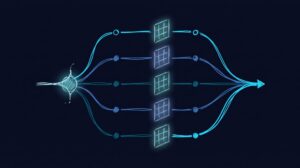
AI synthetic audiences optimize a landing page before launch by scoring each variant against a calibrated model of your target segment and predicting relative conversion intent, message clarity, and objection points without any live traffic. You feed in the variants, define the audience, and the model returns a ranked read on which page resonates and why, so you ship the predicted winner instead of guessing.
AI landing page optimization before launch works as a pre-test layer that sits in front of, not instead of, your existing CRO stack. A practical workflow looks like this:
- Draft the variants. Build two to six landing page versions in your page builder of choice, for example Unbounce or VWO, varying the hero message, social proof, offer framing, or call to action.
- Define the audience. Specify the target segment by demographics, category involvement, and intent, so the synthetic audience reflects the visitors you actually buy traffic for.
- Pre-test against the model. Score each variant against the calibrated audience in minutes, capturing predicted preference, comprehension, and the reasons behind each reaction.
- Ship the winner. Launch the highest-scoring variant as the default rather than splitting cold traffic across weak options.
- Live validate. Run a smaller, faster confirmation test, and use attention and behavior tools like Hotjar or Attention Insight to check that real-world behavior tracks the prediction.
The synthetic layer complements rather than replaces tools you already use: Unbounce and VWO build and serve the variants, Hotjar and Attention Insight read real on-page behavior, and the synthetic audience supplies the pre-launch verdict that tells you which variant deserves live traffic in the first place. The same pattern applies upstream to creative and copy, covered in AI message testing for ad copy and how to pre-test ad creatives, so the message and the page reinforce each other from the same audience signal.

How accurate are synthetic audiences for predicting conversion?
Synthetic audiences are accurate enough to rank landing page variants reliably when they are calibrated on real consumer data, reaching 85 to 95 percent panel parity with human survey results, versus around 55 percent for generic LLM prompts.[3] That level supports confident directional decisions, which variant to ship, while final conversion numbers still come from a live confirmation test.
The accuracy gap is about calibration, not model size. AI agents have replicated human responses on the General Social Survey with roughly 85 percent accuracy, performing about as consistently as the same humans did when retested two weeks later.[5] Generic prompts on ChatGPT or Copilot land near 55 percent panel parity because they predict plausible text rather than the real distribution of audience belief, and a calibrated Digital Twin research layer like neuroflash closes that gap by feeding those same tools audience signals grounded in survey data.[3] The honest limits matter too: synthetic users skew agreeable, can flatten emotional nuance, and cannot generate genuine behavioral data, which is exactly why they are strongest as a pre-test filter rather than a replacement for live measurement.[6] For the underlying numbers, see our work on benchmarking synthetic audience accuracy, the accuracy of AI pre-testing tools, and how to validate AI audience segments before you trust them.
How do you set up a synthetic audience for e-commerce CRO?
To set up a synthetic audience for e-commerce CRO, define the target shopper segment precisely, calibrate the audience model on real consumer data for that segment, then score your landing page or product page variants against it before allocating ad spend. The goal is an audience that mirrors the visitors your campaigns actually drive, so the pre-test predicts behavior for your traffic, not a generic population average.
A reliable e-commerce setup follows five steps:
- Segment by who actually buys. Define the audience by demographics, purchase intent, category involvement, and price sensitivity rather than broad personas, since granularity is the difference between a prediction that holds for your buyers and one that only fits the average.
- Calibrate on real data. Ground the audience in real survey and behavioral signals so it reproduces realistic variance, not just a central tendency.
- Pre-test the high-leverage elements. Score hero offer, product imagery framing, trust signals, shipping and returns messaging, and the primary call to action, the elements that move e-commerce conversion most.
- Ship and measure. Launch the predicted winner, then read real behavior with on-page analytics and attention tools.
- Feed results back. Compare predicted versus actual lift and refine both the audience definition and your hypotheses over time.
Number-first, the payoff is concrete: A/B testing alone lifts conversions by an average of 18 percent over six months, and companies report an average ROI of 223 percent from CRO tooling.[7] Pre-testing protects that ROI by spending live traffic only on variants already predicted to win. The same audience model can also feed paid-traffic decisions upstream, covered in using synthetic audiences with Meta and Google Ads, so the segment you optimize the page for is the segment you actually buy.
What do case studies on landing page conversion show?
Case studies on landing page conversion point to a consistent pattern: organizations that pre-validate concepts with synthetic audiences narrow their options faster and ship stronger defaults, while live testing confirms the result on a shorter timeline. Publishers such as The Times have used synthetic audiences to validate product and editorial concepts, and agencies including Dentsu apply them to audience and media decisions at lower cost than traditional fieldwork.[8]
The broader CRO evidence frames why this matters. About 60 to 70 percent of tests in high-traffic sectors find a winning variation, but more than half of tests overall do not, which means the bottleneck is rarely the testing tool and almost always insufficient traffic and weak starting variants.[1] Pre-testing attacks both: it improves the starting variants by killing weak ideas before launch, and it reduces the number of live tests you need to run to find a winner. The same logic carries into paid media, where case studies on synthetic audiences and ad performance show pre-tested creative outperforming untested creative once it reaches live audiences. The throughline across landing pages, ads, and concepts is identical: validate against a calibrated audience first, then let live traffic confirm rather than explore.
neuroflash Digital Twins: the audience research layer for your CRO stack
neuroflash is not a chatbot or an LLM access tool. Your stack already has Copilot, Claude, Langdock, or ChatGPT for that, and a CRO suite like Unbounce, VWO, Hotjar, or Attention Insight for building and measuring pages. neuroflash is the Digital Twin audience research layer those agents call for calibrated, human-grounded signals, via API or MCP. It pre-tests landing page headlines, hero sections, offers, and CTAs against real consumer profiles before a variant ever reaches live traffic.
- 1,000,000+ real consumer profiles as the calibration base, collected since 2017
- 85 to 95 percent predictive parity with real human survey panels (versus around 55 percent for generic LLM prompts)
- Results in minutes, not 4 to 8 weeks of traditional fieldwork
- API and MCP access, plug Digital Twins into ChatGPT, Claude, Copilot, Langdock, or any agent that speaks MCP
- Validated by 80+ academic studies, used by Fortune-500 brands for Decision Security
Score every landing page variant against calibrated profiles in minutes, so the page you ship to Unbounce or VWO is already the predicted winner and live traffic confirms rather than discovers. Start free.

FAQ
Can synthetic audiences replace live A/B testing for landing pages?
No, and they are not designed to. Synthetic audiences replace the discovery phase, scoring many variants quickly to find the strongest candidate, while live A/B testing remains the gold standard for final confirmation of actual conversion numbers. The most reliable workflow is hybrid: pre-test to pick the winner against a calibrated audience model in minutes, then run a smaller, faster live test to validate the prediction with real traffic. This compresses the overall optimization cycle without removing the real-world checkpoint that protects high-stakes decisions.
How accurate are synthetic audiences for predicting landing page conversion?
Calibrated Digital Twin audiences reach 85 to 95 percent panel parity with human survey results, while generic LLM prompts sit around 55 percent. That accuracy is high enough to rank variants reliably and choose which page to ship, but predicted scores are relative preference signals, not guaranteed conversion rates. Real conversion percentages still come from live measurement. The accuracy gap between calibrated panels and raw LLM prompts is a function of calibration data, not model size, which is why the data source behind a synthetic audience matters more than the underlying model.
Which CRO tools do synthetic audiences work alongside?
Synthetic audiences complement the CRO stack rather than competing with it. Page builders and experimentation platforms like Unbounce and VWO create and serve the variants, behavior and attention tools like Hotjar and Attention Insight read real on-page interaction, and the synthetic audience supplies the pre-launch verdict on which variant deserves live traffic. A research layer such as neuroflash connects to these via API or MCP, so the audience signal flows into the tools your team already uses instead of forcing a separate dashboard and manual export.
How do I set up a synthetic audience for e-commerce CRO?
Start by defining the shopper segment precisely, demographics, purchase intent, category involvement, and price sensitivity, rather than broad personas. Calibrate the audience model on real consumer data so it reflects genuine variance for that segment, then score your highest-leverage page elements: hero offer, trust signals, shipping and returns messaging, and the primary call to action. Ship the predicted winner, measure real behavior with on-page analytics, and feed the predicted-versus-actual comparison back into both your audience definition and your hypotheses. Granularity is the key variable: a prediction for your actual buyers beats one for a generic population average.
How much traffic do you need to make synthetic audience testing worthwhile?
None at the pre-test stage, which is precisely the advantage. Live A/B testing needs roughly 1,000 visitors per variant to detect a 20 percent lift on a page converting at 3 percent, so low-traffic pages often cannot test at all. Synthetic audience testing requires no live traffic to produce a ranked read on variants, which makes it especially valuable for new pages, niche campaigns, and the 20 to 30 percent of sites converting under 1 percent. You still want some live traffic afterward to confirm the winner, but the heavy comparison happens before a single visitor arrives.
My Take
The biggest unlock in landing page optimization is not a better testing tool, it is testing in the right order. For years the default was ship first, learn later, and pay for the learning in live traffic and lost weeks. Synthetic audiences flip that to learn first, ship the favorite, then confirm, which is the same discipline good media buyers already apply to creative. The teams that win will not treat synthetic audiences as a replacement for live data or as a magic oracle. They will treat them as a fast, calibrated pre-filter that makes every live test start from a stronger position, and they will keep a real-world validation step for anything that touches revenue. Used that way, the question stops being whether you can afford to pre-test and becomes whether you can afford to keep shipping landing pages without it.
References
- DemandSage (2026): “55 Conversion Rate Optimization (CRO) Statistics.” https://www.demandsage.com/cro-statistics/
- Mida (2025): “How Much Monthly Traffic Do You Need to Start A/B Testing?” https://www.mida.so/blog/how-much-traffic-ab-testing
- Greenbook (2026): “Testing Synthetic Data Against Academic Benchmarks: A Replication Study.” https://www.greenbook.org/insights/data-science/testing-synthetic-data-against-academic-benchmarks-a-replication-study
- Linear (2025): “CRO Statistics 2025: Top Key Numbers Revealed.” https://lineardesign.com/blog/cro-statistics/
- Nielsen Norman Group (2025): “Evaluating AI-Simulated Behavior: Insights from Three Studies on Digital Twins and Synthetic Users.” https://www.nngroup.com/articles/ai-simulations-studies/
- Nielsen Norman Group (2024): “Synthetic Users: If, When, and How to Use AI-Generated Research.” https://www.nngroup.com/articles/synthetic-users/
- Loopex Digital (2026): “111 Key CRO Statistics for 2026.” https://www.loopexdigital.com/blog/cro-statistics
- BotsCrew (2025): “A Synthetic Audience: The New Normal in User Research?” https://botscrew.com/blog/a-synthetic-audience-the-new-normal-in-user-research/
- MeasuringU (2024): “A Review of Experiments with Synthetic Users.” https://measuringu.com/review-of-experiments-with-synthetic-users/
- Convertize (2025): “A/B Testing Sample Size: The 4 Levels of Difficulty You Need to Know.” https://www.convertize.com/ab-testing-sample-size/
- Instapage (2025): “5 Ways to A/B Test When You Have Low Site Traffic.” https://instapage.com/blog/ab-testing-low-traffic-websites/