
AI SEO means two different things, and most people searching the term do not yet know which one they need. It can mean using AI tools to do classic search engine optimization faster, or it can mean optimizing content so it gets found and cited inside AI-generated answers from ChatGPT, Google AI Overviews and Perplexity. This article sorts out both meanings, maps the vocabulary around the second, and gives a starting point for teams that already run SEO.
Key Takeaways
- Traditional search engine volume is projected to fall 25% by 2026 as users shift to AI chatbots and other virtual agents[1].
- 68.01% of Google searches in the US already end without a click, up from 60.45% in 2024[2].
- Citation overlap between AI engines sits at just 16 to 59%, so ranking well in one answer engine says little about the rest[7].
- Google AI Overviews reach 1.5 billion users a month[10], and ChatGPT has passed 900 million weekly active users[11].
- Targeted optimization for AI answers can raise visibility in generative engine responses by up to 40%[12].
AI SEO means two different things
Search AI SEO and you will find two different articles hiding under one keyword.
The first meaning: using AI tools to do classic SEO work faster, keyword clustering, content briefs, technical audits, writing at scale. The target stays what it always was, ranking higher on Google and driving more clicks. This is SEO with AI as a production method, not a change of destination.
The second meaning: optimizing so AI systems themselves find, quote and cite your content when they answer a question. Here the target changes entirely. Success means earning a mention inside a generated answer, from ChatGPT, Perplexity and Google AI Overviews. That mention is what AI search optimization has to earn, and faster keyword research alone does not get you there.
This article, and the wider cluster around it, focuses on the second meaning. The first is a workflow upgrade, useful and well covered elsewhere. The second is a strategic shift in how buyers find companies, and it is where the terminology gets confusing fast.
Why the second meaning now matters more
The numbers already show this shift underway. Gartner expects traditional search engine volume to drop 25% by 2026 as users move to AI chatbots and other virtual agents[1]. McKinsey found that 50% of consumers already use AI powered search, with 750 billion USD expected to flow through it by 2028[6].
Search behavior inside Google changed too. SparkToro found that 68.01% of Google searches in the US now end without a click, up from 60.45% in 2024[2]. Ahrefs measured the mechanism directly: pages holding the top organic ranking lose 34.5% of their clickthrough rate the moment an AI Overview appears above them[3]. Forrester found buyers using AI instead of search click through only one tenth as often[5].
Fewer clicks does not mean less value. ChatGPT traffic is only about 0.5% of visits at the sites Ahrefs studied, yet generates about 12.1% of signups[4]. The audience is already large: Google AI Overviews reach 1.5 billion users a month[10], and ChatGPT counts more than 900 million weekly users[11].
The vocabulary, sorted
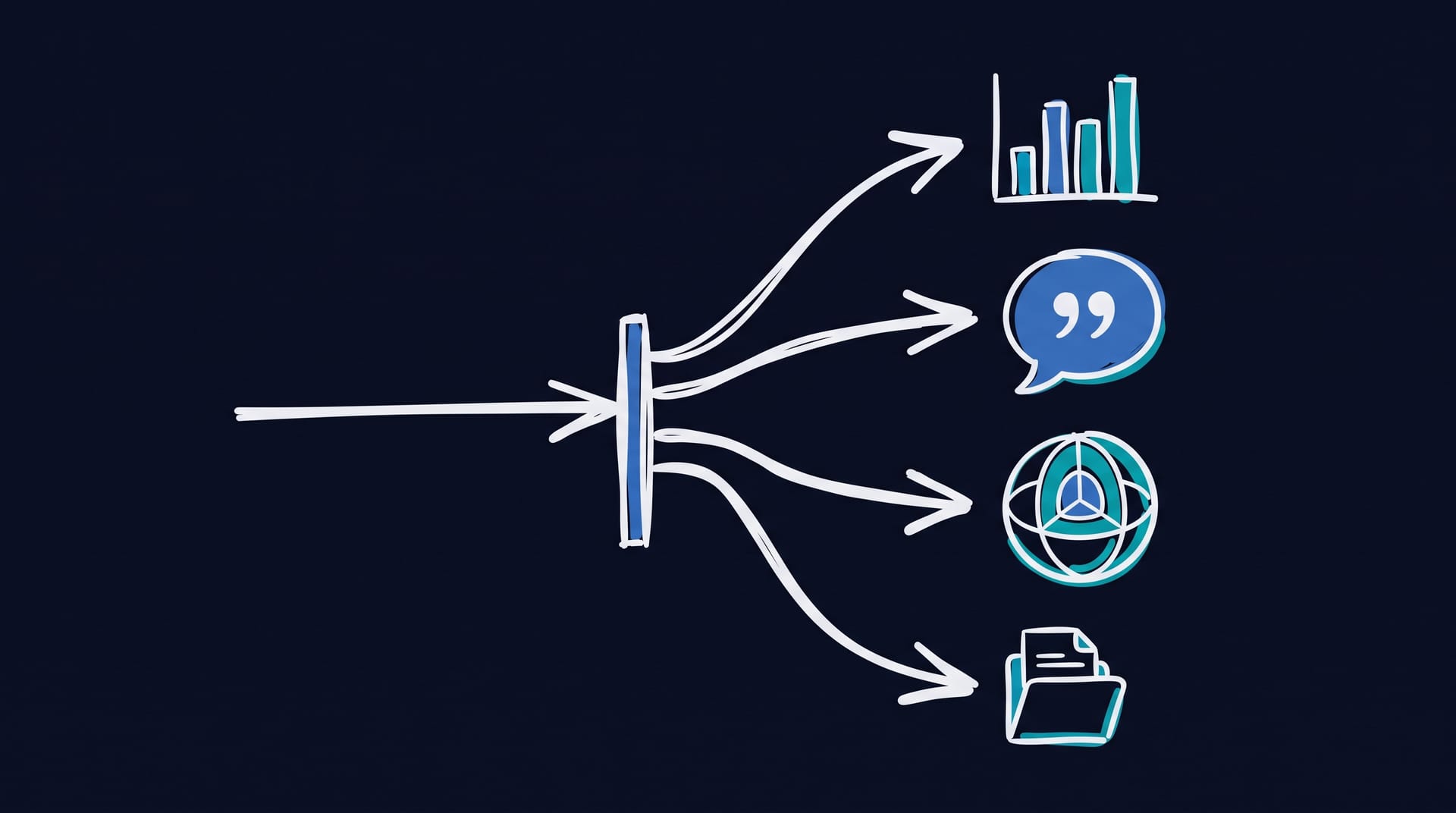
AI SEO is the umbrella term people search before they know the vocabulary. Dig one level deeper and four more precise labels appear, each pointing at a slice of the same problem.
| Term | What it emphasises | Read more |
|---|---|---|
| AI SEO | Umbrella term covering both AI-assisted classic SEO and visibility inside AI answers | This article |
| GEO (Generative Engine Optimization) | Visibility inside generative answers, the term specialists use most | Generative engine optimization |
| AEO (Answer Engine Optimization) | Getting quoted directly, older heritage from snippets and voice search | Answer engine optimization |
| LLM SEO | Technical mechanics: crawling, retrieval, embeddings, structured data | LLM SEO |
| Google AI Overviews | The Google specific surface, one part of the wider GEO picture | Google AI Overviews |
One label is worth ignoring. GAIO shows up in some non-English markets but has no real traction in English language marketing. If you see it, read it as GEO and move on.
None of these four labels describes a separate strategy. A team building for GEO is doing AEO work under a different name, and a team doing LLM SEO is solving the technical layer underneath both. For the full comparison between the newer disciplines and classic SEO, including a practical budget split, see GEO vs SEO.
What stays the same from classic SEO
None of this makes classic SEO obsolete. The disciplines share a foundation.
Crawlability still matters, since neither a search engine nor an AI retrieval system can cite what it cannot access. Clear structure still matters too: headings that state a claim, short paragraphs, one idea per section. Authority still matters, arguably more than before, since AI systems weigh whether other credible sources back a claim. Accuracy matters most, since a wrong or outdated fact damages a source’s own credibility.
A business that already invests in solid classic SEO keeps most of that value. The work ahead is additive, not a replacement.
What genuinely changes
Three shifts separate this from a rebrand of SEO.
From ranking to being cited. A Google ranking is a fixed position in an ordered list. A citation inside an AI answer is a mention that may or may not appear, and may look different each time, with no fixed position to defend.
From clicks to mentions. Classic SEO success shows up as impressions, clicks and position. AI answers frequently generate no click at all, so success gets measured as whether a brand gets mentioned, not whether a visitor arrived.
From one engine to many with little overlap. Classic SEO effectively means optimizing for Google. AI answers spread across ChatGPT, Perplexity, Google AI Overviews, Gemini and Copilot, and the overlap in top 100 sources these engines cite is only 16 to 59%[7]. ChatGPT and Gemini share only 4.9% of cited sources for identical queries[8], and while 98.6% of AI answers cite a top 10 domain, only 22.9% of all citations come from top 10 domains[9]. Ranking well no longer guarantees the citation.
Where to start if you already do SEO
If classic SEO already runs well, here is a practical sequence for the first 30 days.
Week 1: find out where you stand. Ask ChatGPT, Perplexity and Google directly the ten questions your buyers ask most, and note whether your brand gets mentioned. Most teams are surprised by how invisible they are. An AI visibility tool automates this check across engines.
Week 2: read the full playbook. The AI Visibility 2026: The Ultimate Guide covers the tactics this article only maps.
Week 3: fix the technical layer. Confirm your site is crawlable by AI systems, add structured data, and check whether an llms.txt file suits your setup.
Week 4: rewrite your highest value pages to be quotable. Put the direct answer first, name the number and source behind every claim. Content level tactics live in answer engine optimization.
Ongoing: decide how much budget moves from classic SEO to this work. GEO vs SEO has a practical split by business stage.
How to measure it
Measurement changes shape here too. Citation share tracks how often a brand gets named across engines. Share of voice compares that count against competitors asked the same questions. Sentiment matters too, whether a mention reads as neutral, favorable or hedged with caveats. Referral traffic is a fourth signal, the smaller slice of users who do click through, trackable via referrers like chatgpt.com or perplexity.ai.
Here is the honest part. A single check proves close to nothing. Citation overlap between engines sits at just 16 to 59%[7], and ChatGPT and Gemini agreed on cited sources only 4.9% of the time for identical queries[8]. Ask the same question twice and you may see two different answers. Measurement only becomes meaningful as a repeated sample, tracked over time, never as a one time screenshot.
How neuroflash Digital Twins Find the Question Behind AI SEO
Every discipline mapped above optimizes against a question someone asks, not a keyword someone types. Keyword tools show short Google queries, two or three words, no context. In an AI system, people write the whole situation: budget, team size, constraint, and the decision they are trying to make, then the question. Optimizing only for the keyword misses the real question a buyer brings to ChatGPT or Perplexity.
This is where neuroflash Digital Twins change what research is possible. Digital Twins are AI models built on more than 1,000,000 real human profiles, queried directly about how they would research a decision like yours: which exact prompt they would type first, what follow up question comes next, and which criteria decide once they reach a shortlist.
- More than 1,000,000 real human profiles as the data foundation
- 85 to 98% predictive accuracy, versus around 55% for generic AI tools
- Validated by more than 80 academic studies
- Results in minutes instead of the 4 to 8 weeks a traditional survey takes
From there, automated workflows take over. They write new articles that are AI-optimized from the first draft, and rework existing articles so answer engines can parse the claims and cite the page directly.

FAQ
What does AI SEO mean?
Using AI tools to do classic SEO faster, and optimizing content so AI systems like ChatGPT and Google AI Overviews cite it directly. This article and the wider cluster focus on the second, the newer and less understood shift.
Is AI SEO the same as GEO?
GEO, generative engine optimization, is the precise term specialists use for the second meaning: getting cited inside generative answers. AI SEO is the broader umbrella most people search first. See Generative engine optimization for the full definition.
Do I need separate strategies for GEO, AEO and LLM SEO?
No. GEO and AEO both focus on getting cited, and LLM SEO covers the technical mechanics behind both. Building for one covers most of the ground the others need.
Is classic SEO obsolete because of AI search?
No. Crawlability, structure, authority and accuracy still matter to rankings and AI citations alike. A citation inside an answer sits alongside a ranking position, an addition rather than a replacement.
Where should I start if I already run SEO?
Ask ChatGPT, Perplexity and Google your top buyer questions directly to see where you stand, then work through the 30 day sequence above.
My Take
AI SEO is the term people reach for before they know the vocabulary, and that is fine, it does its job as an umbrella. The trouble starts when a team never works out which half of the problem it is actually solving, using AI to write faster, or earning a mention inside an answer.
My take: the second meaning deserves more budget than most companies currently give it. Google AI Overviews already reach 1.5 billion people a month[10], ChatGPT has passed 900 million weekly users[11], and the click that used to follow a search keeps getting rarer[2][5]. Waiting costs more than building citation share now.
Do not drop classic SEO to chase this. Read the AI Visibility 2026: The Ultimate Guide next, or pick the angle from the vocabulary table above that matches the gap you found this week.
References
[1] Gartner (2024): “Traditional search engine volume will drop 25% by 2026 as users move to AI chatbots.” https://www.gartner.com/en/newsroom/press-releases/2024-02-19-gartner-predicts-search-engine-volume-will-drop-25-percent-by-2026-due-to-ai-chatbots-and-other-virtual-agents
[2] SparkToro (2026): “68.01% of Google searches in the US end without a click, up from 60.45% in 2024.” https://sparktoro.com/blog/in-2026-less-than-one-third-of-google-searches-still-send-a-click/
[3] Ahrefs (2025): “Top ranking pages lose 34.5% of their clickthrough rate when an AI Overview is present.” https://ahrefs.com/blog/ai-overviews-reduce-clicks/
[4] Ahrefs (2025): “ChatGPT traffic accounts for about 0.5% of visits but generates about 12.1% of signups.” https://ahrefs.com/blog/chat-gpt-traffic
[5] Forrester (2026): “Buyers using AI instead of search are one tenth as likely to click through to your website.” https://www.forrester.com/blogs/zero-click-is-only-half-the-ai-story/
[6] McKinsey (2026): “50% of consumers already use AI powered search and 750 billion USD in spending will flow through it by 2028.” https://www.mckinsey.com/capabilities/growth-marketing-and-sales/our-insights/new-front-door-to-the-internet-winning-in-the-age-of-ai-search
[7] BrightEdge (2026): “The overlap of top 100 citation sources between AI engines is only 16 to 59%.” https://www.brightedge.com/resources/weekly-ai-search-insights/ai-search-same-brands-different-sources
[8] Wellows (2026): “Across 11.1 million citations in 571,729 AI answers, ChatGPT and Gemini shared only 4.9% of cited sources for identical queries.” https://wellows.com/blog/llm-seo/
[9] SEOlyze (2026): “98.6% of AI answers cite at least one top 10 domain, but only 22.9% of all citations come from top 10 domains.” https://www.seolyze.com/studie/wen-zitiert-die-ki
[10] Alphabet via Search Engine Journal (2025): “Google AI Overviews reach 1.5 billion users per month.” https://www.searchenginejournal.com/googles-ai-overviews-reach-1-5-billion-monthly-users/545333/
[11] Search Engine Land (2026): “ChatGPT has more than 900 million weekly active users.” https://searchengineland.com/chatgpt-900-million-weekly-active-users-470492
[12] Princeton, Aggarwal et al. (2024): “Targeted optimization can raise visibility in generative engine responses by up to 40%.” https://arxiv.org/abs/2311.09735