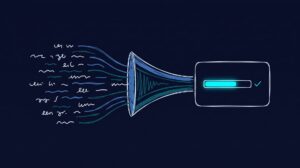
Google AI Overviews are AI-generated summaries that Google places directly inside the search results page, above the traditional list of blue links, answering a query by pulling together information from several sources at once. They now appear on a meaningful share of everyday searches and change whether a user ever clicks through to a website.
Key Takeaways
- Google AI Overviews reach 1.5 billion users every month worldwide[1].
- The share of Google searches showing an AI Overview rose from 6.49% in January 2025 to 24.61% in July, then settled at 15.69% in November[2].
- Top ranking pages lose 34.5% of their clickthrough rate the moment an AI Overview appears, based on a study of 300,000 keywords[3].
- 68.01% of Google searches in the US now end without a click, up from 60.45% in 2024[4].
- 98.6% of AI answers cite at least one top 10 ranking domain, yet only 22.9% of all citations actually come from those top 10 domains[7].
What Google AI Overviews are
An AI Overview is a block of generated text Google inserts near the top of the results page, usually above the first organic listing. Instead of ten blue links, the page opens with a short summary that directly answers the query, built from several web pages at once.
Visually, it stands out immediately: a shaded box with a paragraph or short list, plus small source cards attached below or beside the text. Clicking one of those cards leads to the original page, though far fewer users make that click than they would a standard blue link.
AI Overviews tend to appear on informational queries: definitions, comparisons, how-to questions, and topics complex enough that no single page covers the whole answer. They show up across desktop and mobile, part of a broader shift in generative search behavior covered in generative engine optimization.
How widespread they are
The rollout has not been a straight line. Semrush tracked the share of searches showing an AI Overview rising from 6.49% in January 2025 to a peak of 24.61% in July, then settling back to 15.69% by November[2], roughly doubling through mid year before Google trimmed it back to about two thirds of the peak, not a gradual climb toward covering every query.
The same study found the zero click rate moved only from 33.75% to 31.53% over that period[2], a smaller shift than the prevalence swing itself. That gap suggests AI Overviews are reshaping which pages get the click more than eliminating clicks outright.
What they do to your clicks
Three separate studies quantify the click impact, and each measures a different slice of the problem, so the numbers are not interchangeable.
Ahrefs measured the effect at the page level: across 300,000 keywords, top ranking pages lose 34.5% of their clickthrough rate the moment an AI Overview appears above them[3], even while still holding position 1.
SparkToro measured the effect at the search level, across all query types, not only ones with an AI Overview: 68.01% of Google searches in the US now end without any click at all, up from 60.45% in 2024[4], part of a broader zero click trend that AI Overviews only partly drive.
Forrester measured the effect at the buyer level. Buyers who use AI instead of a search engine are one tenth as likely to click through to a company website, and website traffic tied to search is down 10% to 40% over the past year[5]. The range is wide, but the direction matches the other two studies: less traffic reaches the website, more of the answer gets consumed before anyone leaves the results page.
Which sources Google cites in AI Overviews
An analysis of 250,000 AI answers across ChatGPT, Google AI Overviews and Perplexity found which domains get cited most often across all three[6].
| Domain | Share of citations |
|---|---|
| YouTube | 15.18% |
| 14.55% | |
| Wikipedia | 9.05% |
| 7.12% |
Large platforms with heavy user generated content dominate the list, but that does not mean only large domains get cited. A separate analysis of 11,180 keywords and 43,035 citations found 98.6% of AI answers cite at least one top 10 domain, but only 22.9% of all citations actually come from those top 10 domains[7]. Ranking well in classic search makes a citation likely somewhere in the answer, but your page rarely supplies most of what gets cited. The rest spreads across smaller, specialized pages, a pattern tied to how retrieval and citation work under the hood, covered in LLM SEO.
Citation patterns also differ between AI systems. BrightEdge found authoritative sources account for only 10% of citations at Google AI Overviews, compared with 26% at Gemini, and the overlap between the two engines’ top 100 cited sources is only 16% to 59%[8]. Optimizing narrowly for one engine does not transfer cleanly to another.

What you can actually influence
Five levers consistently affect whether Google cites a page inside an AI Overview.
Answer first structure. State the direct answer in the opening sentence of a section, then explain. A system extracting a quotable answer favors content that gives it up immediately rather than three paragraphs in.
Specific, sourced numbers. A concrete figure attributed to a named source reads as more trustworthy and easier to lift than a vague claim.
Clean structure. Clear headings, short paragraphs, and tables where a comparison exists make a page easier to parse into a citable chunk.
Presence beyond your own site. Large platforms such as YouTube, Reddit, Wikipedia and LinkedIn already account for a large share of citations[6], so visibility there adds to what your own site can achieve alone.
Regular updates. Pages not updated at least quarterly are three times more likely to lose their citations[9], and a page last touched years ago competes poorly against a fresher one.
These five levers matter, but they are only part of a wider playbook. For the full cross platform approach, including tactics for ChatGPT and Perplexity, see the AI Visibility 2026: The Ultimate Guide. For writing content that gets quoted directly rather than merely cited, see answer engine optimization.
Can you opt out of AI Overviews?
Site owners have limited, specific control here. A site can restrict how much content Google may use in a generated summary through a nosnippet directive, which blocks a preview for that page. That is close to the only lever available, and it is blunt: it either allows a summary excerpt or blocks it entirely, with no per-query option.
For most businesses, appearing inside an AI Overview is worth having rather than avoiding, since a citation still puts a brand name and a source link in front of a large audience even without a click. Opting out tends to make sense only in narrow cases: paywalled content, or pages where a partial, out of context excerpt could misrepresent something sensitive.
There is no setting that guarantees a citation, and none that reliably keeps a competitor out. Google’s system decides which sources it pulls from and how it phrases the summary.
How to measure whether you appear
Measuring AI Overview visibility looks different from classic rank tracking, because a citation does not always produce a click to measure. A practical approach combines manual spot checks on core queries, repeated on a schedule, with tools such as Sistrix and Semrush that now track which keywords trigger an AI Overview and whether a domain is cited within it. Search Console adds an indirect signal: a widening gap between impressions and clicks at a stable ranking position often points to an AI Overview intercepting clicks. Comparing your citation frequency against competitors rounds out the picture.
Here is the honest part. A single spot check proves very little. AI Overviews are generated fresh per query and can vary between runs on the identical term, so a citation seen today is no guarantee for tomorrow. A related study found only 30% of brands stay visible across back to back answers, and just 20% remain present across five consecutive runs of the same question[9]. A meaningful read only comes from tracking the same queries repeatedly over weeks, across enough keywords that noise from any single result cancels out.
The Real Question Behind Every AI Overview Citation
Whether your page shows up inside an AI Overview depends heavily on the exact question someone asked, and most teams never see that question. Keyword tools were built for short, two or three word Google queries stripped of context. People typing into an AI system describe a whole situation instead, budget, team size, what they already tried, then the actual question. Optimizing only for the short keyword version misses the real question a buyer brings to Google.
This is where neuroflash Digital Twins change what is actually knowable. Digital Twins are AI models built from more than 1,000,000 real human profiles, queried directly about how your own audience would approach a decision. How would they research a topic like yours? Which prompt would they type? Which criteria decide once they are comparing a shortlist? The answers come back as full prompts and reasoning, not guessed keywords.
- More than 1,000,000 real human profiles as the underlying data
- 85% to 98% predictive accuracy, compared to around 55% for generic AI tools
- Validated by more than 80 academic studies
- Results in minutes, instead of the 4 to 8 weeks a classic survey takes
From there, automated workflows take over the production side. New articles get written AI optimized from the first draft, and existing articles get reworked so answer engines can parse and cite them cleanly, which matters here since structure and freshness are two of the five levers above.
You can explore what this looks like at neuroflash.

FAQ
What are Google AI Overviews?
Google AI Overviews are AI-generated text summaries that Google places near the top of the search results page, above the standard organic listings, answering a query by combining information from multiple web pages into one block.
How often do AI Overviews appear in search results?
Prevalence has shifted rather than climbed steadily. It rose from 6.49% of searches in January 2025 to 24.61% in July, then settled at 15.69% by November, so roughly one in six to one in four searches shows one depending on the month.
Can I opt out of appearing in AI Overviews?
Only partially, through a nosnippet directive that blocks summary use entirely. There is no way to allow a citation on some queries and block it on others, and for most businesses appearing is more valuable than opting out.
Do AI Overviews replace traditional search results?
No. They sit above the organic listings rather than replacing them, but top ranking pages still lose over a third of their clickthrough rate once one appears above them.
Is a Google AI Overview the same thing as a ChatGPT answer?
No. Both are AI-generated summaries, but they run on different systems with different citation patterns. Authoritative sources make up only about 10% of Google AI Overview citations compared with 26% at Gemini.
My Take
Google AI Overviews are not a temporary experiment anymore. Reaching 1.5 billion users a month[1] puts them in front of a scale no business selling anything online can reasonably ignore, and a 34.5% clickthrough loss on top ranking pages[3] is a structural change, not a rounding error.
What surprised me most is the prevalence pattern itself. AI Overviews spiked to nearly a quarter of searches, then Google pulled back to roughly 15%[2]. Google is still actively tuning which queries deserve a summary, so treat this as a moving target, not a settled feature.
I would also push back on the more alarmist reading: the zero click rate moved far less than the AI Overview prevalence did[2], which suggests clicks are being redistributed toward whichever sources Google cites, not simply disappearing. That fight stays worth having, since the citation pool remains open and most citations go beyond the usual top 10 domains[7].
For the tactics that go beyond what a single Google feature can teach you, the AI Visibility 2026: The Ultimate Guide is the next read, since AI Overviews are one piece of a landscape where traditional search volume itself is projected to fall 25% by 2026 as more of that behavior moves to AI chatbots[10].
References
[1] Alphabet via Search Engine Journal (2025): “Google AI Overviews reach 1.5 billion users per month.” https://www.searchenginejournal.com/googles-ai-overviews-reach-1-5-billion-monthly-users/545333/
[2] Semrush (2025): “The share of searches with an AI Overview rose from 6.49% in January to 24.61% in July and settled at 15.69% in November. Zero click rate moved from 33.75% to 31.53%.” https://www.semrush.com/blog/semrush-ai-overviews-study/
[3] Ahrefs (2025): “Top ranking pages lose 34.5% of their clickthrough rate when an AI Overview is present, based on 300,000 keywords.” https://ahrefs.com/blog/ai-overviews-reduce-clicks/
[4] SparkToro (2026): “68.01% of Google searches in the US end without a click, up from 60.45% in 2024.” https://sparktoro.com/blog/in-2026-less-than-one-third-of-google-searches-still-send-a-click/
[5] Forrester (2026): “Buyers using AI instead of search are one tenth as likely to click through to your website, with traffic down 10 to 40% over the past year.” https://www.forrester.com/blogs/zero-click-is-only-half-the-ai-story/
[6] blinq via OnlineMarketing.de (2026): “Most cited domains in AI answers: YouTube 15.18%, Reddit 14.55%, Wikipedia 9.05%, LinkedIn 7.12%. Based on 250,000 AI answers.” https://onlinemarketing.de/technologie/welche-quellen-chatgpt-google-perplexity-zitieren-studie
[7] SEOlyze (2026): “98.6% of AI answers cite at least one top 10 domain, but only 22.9% of all citations come from top 10 domains. Based on 11,180 keywords and 43,035 citations.” https://www.seolyze.com/studie/wen-zitiert-die-ki
[8] BrightEdge (2026): “Authoritative sources account for between 10% at Google AI Overviews and 26% at Gemini. The overlap of top 100 citation sources between engines is only 16 to 59%.” https://www.brightedge.com/resources/weekly-ai-search-insights/ai-search-same-brands-different-sources
[9] AirOps (2026): “Only 30% of brands stay visible across back to back answers, just 20% remain present across five consecutive runs, and pages not updated quarterly are three times more likely to lose citations.” https://www.airops.com/report/the-2026-state-of-ai-search
[10] Gartner (2024): “Traditional search engine volume will drop 25% by 2026 as users move to AI chatbots.” https://www.gartner.com/en/newsroom/press-releases/2024-02-19-gartner-predicts-search-engine-volume-will-drop-25-percent-by-2026-due-to-ai-chatbots-and-other-virtual-agents