
LLM SEO is the practice of shaping content so large language models such as ChatGPT, Gemini or Claude can find it, understand it and cite it inside their answers. LLMO means the same thing, just the earlier name. Unlike classic SEO, which optimizes for a ranking position, LLM SEO optimizes for a mention inside a generated answer, and the mechanics deserve a plain explanation.
Key takeaways
- ChatGPT now has more than 900 million weekly active users[6].
- ChatGPT and Gemini share only 4.9% of cited sources for identical queries[1], so a one-engine strategy misses the rest.
- Brand citations in ChatGPT rose from 0.6% in January 2025 to 2.8% in August 2025[5].
- Only 30% of brands stay visible across back to back AI answers, and just 20% survive five consecutive runs of the same question[3].
- Targeted optimization can raise visibility in generative engine responses by up to 40%[8].
What LLM SEO means
LLM SEO stands for large language model search engine optimization, LLMO for large language model optimization. Both describe the same job: making sure an AI model can find your content, trust it, and repeat it in an answer.
You will also see GEO (generative engine optimization) and AEO (answer engine optimization) for similar work. All three overlap so heavily the label rarely matters. See GEO vs SEO for a comparison with classic search, and answer engine optimization, which focuses on getting quoted directly. The AI Visibility 2026: The Ultimate Guide covers the fuller playbook; this piece covers what those touch only briefly, what actually happens inside the model when it decides to cite you, or not.
Worth caring about even though the traffic still looks small. ChatGPT traffic is only about 0.5% of visits to the average site, yet generates roughly 12.1% of signups[4], and LLM sessions rose 527% across 19 GA4 properties between January and May 2025[9].
How a language model actually finds your content
To understand LLM SEO, you need two different ways a model can know about your content. Mixing them up is why marketers give up too early.
First, training data. A model like ChatGPT or Claude is built by feeding it huge amounts of text and learning patterns from it, then training stops on a fixed cutoff date. Think of a student who read an enormous library once, years ago, then closed every book. That model has never read an article published after the cutoff, or updated last week.
Second, retrieval augmented generation, usually shortened to RAG. Many AI systems, including ChatGPT with browsing, Google AI Overviews and Perplexity, can search the live web while answering, read a handful of current pages, and write the answer from what they just read. It is like a research assistant who, instead of recalling years of past reading, walks to the shelf right now and answers from what is on the page today.
That is why “knowing you from training” and “finding you live” are two different things. A model can know your brand from training and still never cite your latest article, because that article was never part of its training. Just as easily, it can cite a page it was never trained on, simply because it found that page live.
So LLM SEO is really two jobs:
- Training visibility: getting mentioned often enough that you show up in whatever the model absorbed at its last training run. Slow to change, durable once achieved.
- Retrieval visibility: making sure your page turns up when the model searches live and is easy to quote. Faster to change, where freshness and structure earn their keep.
Most of this article covers the second job, the part you can act on.
Why the same question gives different sources in different engines
Ask ChatGPT and Gemini the exact same question and you often get answers built from almost entirely different sources. Wellows tracked 11.1 million citations across 571,729 AI answers from 363 brands in 35 regions, and found ChatGPT and Gemini shared only 4.9% of cited sources for identical queries[1]. Not a rounding error, the two engines simply read different parts of the web.
BrightEdge found a similar pattern. Authoritative sources make up between 10% of citations at Google AI Overviews and 26% at Gemini, and the top 100 citation sources overlap between engines by only 16% to 59%[2].
Each engine runs its own retrieval system, its own idea of what counts as trustworthy, and its own training cutoff. Optimizing for one engine only is a bet, not a strategy. A page built to be easy for any model to read has a far better shot than one tuned for the quirks of a single engine.
What makes content easy for a model to use
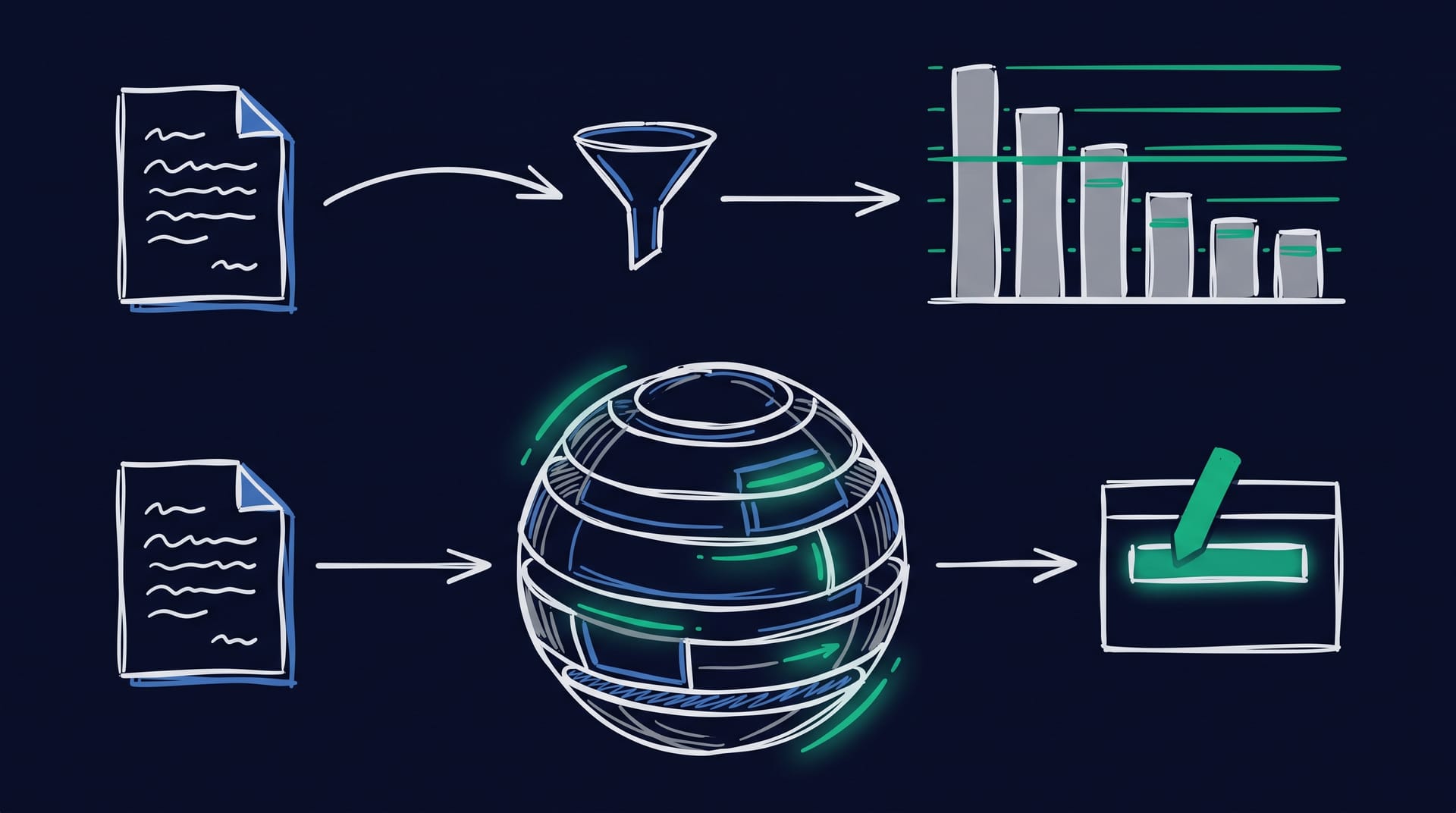
Five habits consistently make content easier for a model to lift and quote.
Answer first structure. Put the direct answer in the first sentence or two, then explain. A model skimming for something to quote grabs the first clear statement it finds, so a buried answer rarely gets used.
Self contained sections. Write each section so it makes sense on its own. Models often quote a single paragraph out of a full page, so “as mentioned above” becomes meaningless once lifted out of context.
Unambiguous statements. Say the thing plainly instead of hedging with “it depends.” A model that has to guess your meaning moves on to a clearer source.
Numbers with sources. A concrete figure attached to a named source, like the citations here, is more attractive to cite than a vague claim, since it gives the model something checkable to repeat.
Clear authorship. Visible bylines, dates and credentials signal a real, accountable source. Anonymous or undated content reads as lower trust, even when accurate.
Why freshness matters more than in classic SEO
In classic SEO, a strong article could hold its ranking for years with light maintenance. LLM SEO does not work that way, because retrieval visibility rewards recency far more aggressively.
AirOps found that only 30% of brands stay visible across back to back answers, and just 20% survive five consecutive runs of the same question[3]. Pages not updated at least quarterly are three times more likely to lose their citations[3]. An article accurate and well cited in January can quietly disappear by summer if nobody touches it.
A content calendar for LLM SEO needs a maintenance line, not only a publishing line. Revisiting your best pages every quarter matters as much as writing new ones.
Do you need an llms.txt file for this?
llms.txt is a proposed text file, similar in spirit to robots.txt, telling AI crawlers which pages to read first. It sounds like exactly what LLM SEO should recommend.
The honest answer is probably not yet. Kai Spriestersbach tracked 62,100 AI bot requests to a site and found only 84, about 0.1%, ever requested the llms.txt file[7]. Google’s John Mueller has confirmed no AI system currently uses it[7]. Adoption data is too weak to call this a priority. Read llms.txt for the full breakdown, and spend your time on the five habits above first, they already work today.
How to measure LLM SEO
Measuring LLM SEO looks different, because there is no single position to track.
Citation share tracks how often your brand appears in AI answers, versus competitors. Share of voice looks at what percentage of all mentions in a topic area are yours. Sentiment captures whether a mention is neutral, positive or qualified with a caveat.
Here is the part most guides skip: answers vary between runs. Ask the same engine the same question twice and you can get two different sets of sources, which lines up with AirOps finding only 20% of brands survive five consecutive runs of one question[3]. A single check proves close to nothing. Only repeated measurement over time, across multiple engines, produces a number worth acting on, and the AI Visibility 2026: The Ultimate Guide walks through setting that up.
Why keyword tools miss the real question
Everything above answers one thing: what happens when someone types a question into an AI model, and how you make your content part of the answer. But there is a gap most LLM SEO advice skips. Keyword tools were built for a world where people typed two or three words into Google. In an AI system, people type whole situations: budget, team size, prior experience, what already went wrong, what needs deciding by Friday. The short keyword version misses the question nobody in an AI chat actually asks.
This is where neuroflash Digital Twins come in: AI models built from more than 1,000,000 real human profiles, which you can query directly about how your actual audience would approach a question. How would they research it, which prompt would they type, what follow up question comes next, and which criteria decide whether they trust what they read?
- More than 1,000,000 real human profiles as the data foundation
- 85% to 98% predictive accuracy, compared to around 55% for generic AI tools
- Validated by more than 80 academic studies
- Results in minutes instead of the 4 to 8 weeks a classic survey takes
From there, automated workflows take over. New articles get written AI optimized from the start, and existing ones get reworked so answer engines can parse and cite them. That matters here because freshness and structure, the two things this article keeps returning to, decide whether a model can use a page at all.

FAQ
Is LLM SEO the same as LLMO?
Yes. Both describe the same discipline: optimizing content so language models can find, trust and cite it.
Is LLM SEO different from GEO or AEO?
Not meaningfully in daily practice. GEO and AEO target the same outcome through slightly different framing; LLM SEO is used here for the mechanics angle.
Does my content need to be part of a model’s training to show up in ChatGPT?
No. Retrieval augmented generation lets many AI systems search the live web and read pages in real time, so a page can be cited the same day it is published.
How often should I update existing articles for LLM SEO?
At least quarterly. Pages not updated every three months are three times more likely to lose their citations.
Can I track LLM SEO results with a single check?
Not reliably. Answers vary between runs, so one query proves very little. Track citation share, share of voice and sentiment repeatedly over time instead.
My Take
LLM SEO deserves attention, but not because it is a rebrand of SEO with a new acronym stapled on top. The mechanic underneath is different: training visibility that moves slowly, plus retrieval visibility that rewards freshness and structure.
Most teams treat this like classic SEO with new vocabulary, then wonder why nothing moves. The five habits here cost nothing extra and work across every engine, because they make content easier for any machine to use, not just one model to like.
My honest read: skip llms.txt for now, the adoption numbers are not there yet. Spend that time keeping your best pages readable and current every quarter. That is the part of LLM SEO you control, and it moves the needle this summer, not next year.
References
[1] Wellows (2026): “Across 11.1 million citations in 571,729 AI answers from 363 brands in 35 regions, ChatGPT and Gemini shared only 4.9% of cited sources for identical queries.” [https://wellows.com/blog/llm-seo/](https://wellows.com/blog/llm-seo/)
[2] BrightEdge (2026): “Authoritative sources account for between 10% at Google AI Overviews and 26% at Gemini. The overlap of top 100 citation sources between engines is only 16 to 59%.” [https://www.brightedge.com/resources/weekly-ai-search-insights/ai-search-same-brands-different-sources](https://www.brightedge.com/resources/weekly-ai-search-insights/ai-search-same-brands-different-sources)
[3] AirOps (2026): “Only 30% of brands stay visible across back to back answers, just 20% remain present across five consecutive runs, and pages not updated quarterly are three times more likely to lose citations.” [https://www.airops.com/report/the-2026-state-of-ai-search](https://www.airops.com/report/the-2026-state-of-ai-search)
[4] Ahrefs (2025): “ChatGPT traffic accounts for about 0.5% of visits but generates about 12.1% of signups.” [https://ahrefs.com/blog/chat-gpt-traffic](https://ahrefs.com/blog/chat-gpt-traffic)
[5] Similarweb (2026): “Brand citations in ChatGPT rose from 0.6% in January 2025 to 2.8% in August 2025.” [https://www.similarweb.com/blog/marketing/geo/gen-ai-stats/](https://www.similarweb.com/blog/marketing/geo/gen-ai-stats/)
[6] Search Engine Land (2026): “ChatGPT has more than 900 million weekly active users.” [https://searchengineland.com/chatgpt-900-million-weekly-active-users-470492](https://searchengineland.com/chatgpt-900-million-weekly-active-users-470492)
[7] Kai Spriestersbach (2026): “Only 84 of 62,100 AI bot requests went to llms.txt, that is 0.1%. Google confirmed through John Mueller that no AI system currently uses llms.txt.” [https://medium.com/@kaispriestersbach/the-llms-txt-is-dead-more-precisely-a-dud-ab7bee4f469c](https://medium.com/@kaispriestersbach/the-llms-txt-is-dead-more-precisely-a-dud-ab7bee4f469c)
[8] Princeton, Aggarwal et al. (2024): “Targeted optimization can raise visibility in generative engine responses by up to 40%.” [https://arxiv.org/abs/2311.09735](https://arxiv.org/abs/2311.09735)
[9] Previsible via Search Engine Land (2025): “LLM sessions rose 527% across 19 GA4 properties between January and May 2025.” [https://searchengineland.com/ai-traffic-up-seo-rewritten-459954](https://searchengineland.com/ai-traffic-up-seo-rewritten-459954)