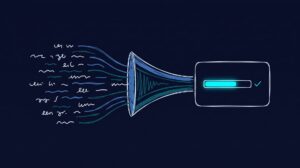
neuroflash Digital Twins is a self-service platform for synthetic audiences built on more than 1,000,000 real survey and profile data points collected since 2017, with some twins carrying up to 250 answered questions, used by marketing teams to test LinkedIn posts, CTAs, landing pages, and images before they go live. Electric Twin is a London-based challenger that builds synthetic audiences from a client’s own first-party data, surveys, panels, focus group transcripts, or engagement data, combined with large language models and social-science modeling, so the resulting population can be questioned like a live survey or focus group.[1] Both promise answers in minutes instead of weeks, but the starting point differs sharply. Electric Twin says so itself: its FAQ states that “if you have data on your audience, we can almost always build a reliable model from it.”[1] neuroflash Digital Twins ships its own calibration base of more than 1,000,000 profiles, so a team without a warehouse full of survey responses can still start the same day.
This article compares both platforms on data requirements, accuracy methodology, access, and fit. If you are evaluating other providers too, see our comparisons of neuroflash vs. Simile and neuroflash vs. Evidenza, or the broader overview in our Digital Twins market research hub.
Key Takeaways
- Electric Twin publishes a transparent accuracy methodology: a hold-out study on 11,000 personas, two metrics (1-MAE at 95.5%, the stricter NDAM at 92%), and an open comparison against eight traditional panel methods.[2]
- Electric Twin builds audiences from the client’s own first-party data. Without a usable dataset there is no twin, and onboarding is sales-led and bespoke, with the team embedded at The Times for months.[3]
- neuroflash Digital Twins brings its own calibration base of 1,000,000+ real profiles, so teams can start without a data foundation of their own, with results in minutes instead of the 4-8 weeks classic fieldwork takes.
- Electric Twin has no public pricing page (`/pricing` returns a 404), no self-service signup, and one publicly named client, The Times.[1]
- The headline “96% match rate” on Electric Twin’s homepage rounds the 95.5%/92% figures from its own methodology post, and its LSE-affiliated validator is a paid Scientific Advisor, not an independent auditor.[2][4]
- neuroflash reaches 85-98% prediction accuracy in customer pilots, including 98% across 22 product claims in the Essity case study, against roughly 55% for generic ChatGPT roleplay, validated across 80+ academic studies.
What Data Does Electric Twin Need to Build a Synthetic Audience?
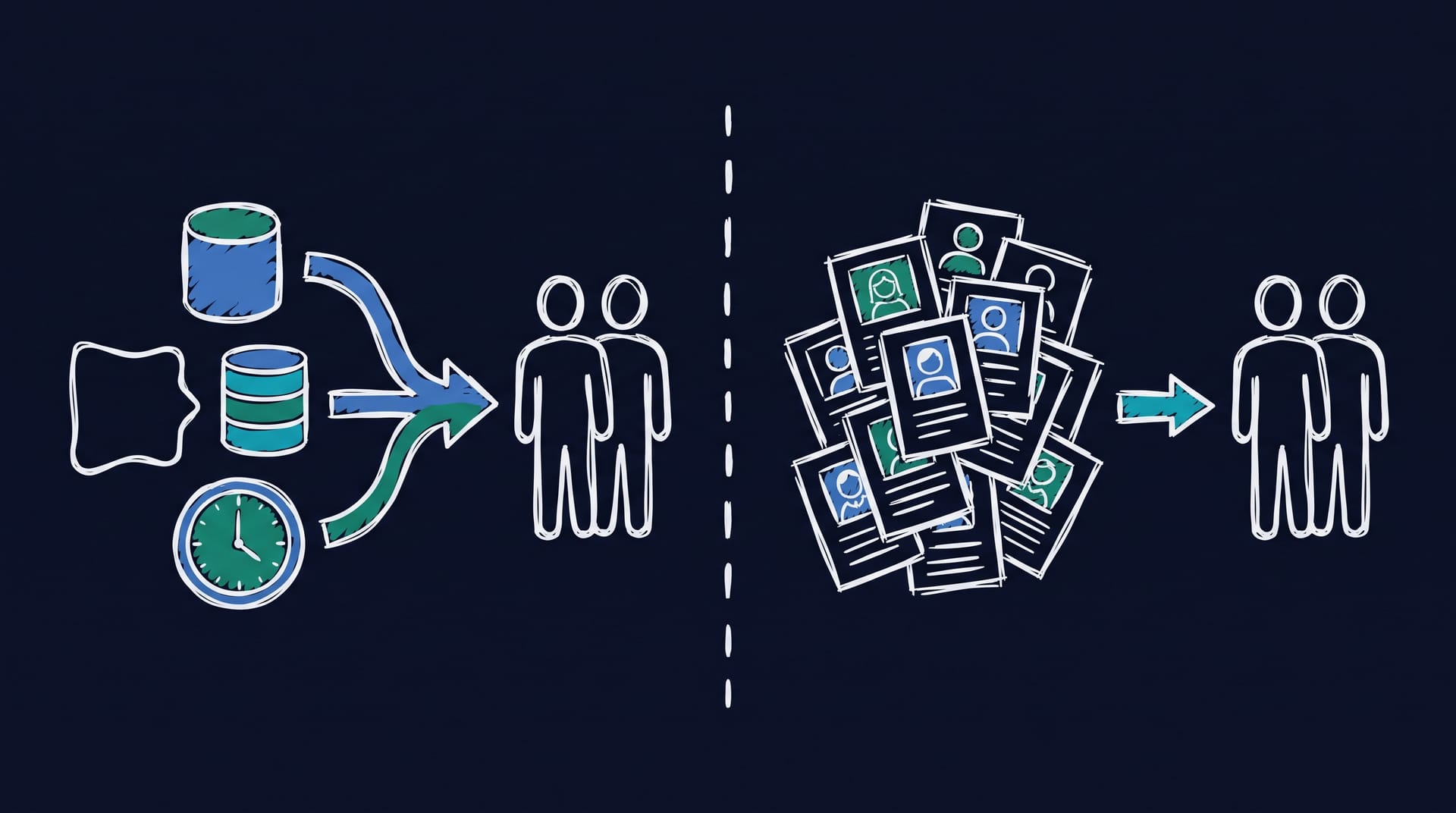
Electric Twin needs the client’s own first-party data, surveys, panels, focus group transcripts, or engagement data, before it can build a working model, and an initial conversation exists specifically to check whether the data on hand is sufficient.[1] That is a different starting point than a platform with a built-in panel: the audience Electric Twin simulates is only as good, and only as available, as the data the client already has.
How demanding that requirement can get is visible in Electric Twin’s own reference case. For The Times (News UK), the team was embedded with the publisher’s data and insights units for months to build “Times ExplorAItion,” the joint project that let the newsroom run its own reader research on demand.[3] That is a genuine, quantified outcome: Director of Data Operations Chris Courtney-Smith described it as going “from rationing research to running it on demand,” with “the same team, ten times the output.”[3][7] It is also, by its own account, a months-long, bespoke integration rather than a signup.
Electric Twin’s Published Accuracy Methodology
Electric Twin reports 95.5% accuracy on its 1-MAE metric and 92% on the stricter NDAM metric, both measured against real human responses held out of training. In a methodology post on its own blog, Electric Twin describes testing 11,000 unique personas from UK and US populations on strictly separated evaluation data.[2] Human test-retest reliability, the same question asked twice of the same real people, sits at roughly 94% on NDAM, so Electric Twin’s synthetic answers land about two points below that ceiling. Crediting where credit is due, publishing that gap voluntarily is more transparent than most vendors in this category, who tend to publish one headline number and stop there.
Electric Twin also ran 1-MAE against eight traditional survey methods: opt-in panels scored 97.5%, Prolific 96%, river sampling 93-94%, MTurk 93%, averaging around 96%.[2] Electric Twin’s 95.5% sits in the same range as established human panels, not clearly above them. A separate comparison against eight classical approaches with more than 8,000 respondents produced a mean absolute error of 0.05, prompting CEO Alex Cooper to call the synthetic predictions “indistinguishable from conventional research.”[2] Broader reporting on the category cautions that synthetic audiences should inform ideas rather than drive final decisions on their own, a fair caveat regardless of vendor.[6]
Two things are worth stating precisely. First, the “96% match rate” on Electric Twin’s homepage compresses the 95.5%/92% figures into one cleaner-sounding number.[1] Second, its scientific advisory involves Professor Michael Muthukrishna of LSE, a named, paid Scientific Advisor, not an independent, arm’s-length auditor or a separately published peer-reviewed evaluation.[4] Neither undermines the underlying methodology, still more transparent than most competitors publish, but both matter for an accurate read of the claims.
neuroflash Digital Twins: Calibrated Audiences Without Your Own Data Foundation
neuroflash takes the opposite starting point. Instead of requiring a client’s first-party dataset before a twin can exist, it builds synthetic audiences from more than 1,000,000 real survey and profile data points collected since 2017, with individual twins carrying up to 250 answered questions, so a team can start testing content without first assembling a data foundation. Core capabilities include Chat with your Audience for open dialogue with a twin segment, content tests for posts, CTAs, and landing pages, image feedback through NeuroLens with up to 96% gaze prediction, text and slogan scoring through NeuroWords, A/B comparisons, and automated content workflows.
The platform is self-service and free to start at app.neuroflash.com, with DACH roots and a GDPR and EU-hosting focus, available in German and English. Results come back in minutes rather than the 4-8 weeks classic fieldwork usually requires. From the Pro plan, API and MCP access lets teams plug twins directly into ChatGPT, Claude, Copilot, Langdock, and other agents already in daily use. neuroflash functions as the digital twin research layer that plugs into whatever AI stack a team already runs, not as its own chatbot.
neuroflash vs. Electric Twin at a Glance
| Criterion | neuroflash Digital Twins | Electric Twin |
|---|---|---|
| Data Basis | 1,000,000+ real survey/profile data points since 2017, up to 250 questions per twin | Client’s own first-party data: surveys, panels, focus groups, engagement data[1] |
| Methodology | Proprietary twin modeling on structured survey/profile data | LLMs plus social-science modeling on client data, built via sales-led onboarding[1] |
| Accuracy/Validation | 85-98% in customer pilots (98% on 22 Essity claims), 80+ studies, vs ~55% generic ChatGPT | 95.5% (1-MAE) and 92% (NDAM) on 11,000 held-out personas, ~2 points below human test-retest ceiling[2] |
| Use Cases | Marketing content: posts, CTAs, landing pages, images, slogans | Concept tests, messaging validation, creative and ad tests, audience research[1] |
| Pricing Model/Access | Self-service, free to start | Sales-led only, no public pricing, `/pricing` returns 404[1] |
| Target Customer | Marketers and content teams of any size | Enterprises with existing first-party data, insurance, media, retail[1] |
| Languages/EU | German and English, GDPR/EU-hosting focus | Not publicly documented; UK-based company |
When Is Electric Twin the Better Choice?
Electric Twin is the better choice for organizations that already sit on rich first-party audience data, survey archives, panel results, or engagement histories, and want a bespoke synthetic population built from that data, with the budget and timeline for an enterprise engagement. The Times case is the clearest illustration: a publisher with deep reader data and an existing insights team, willing to embed with Electric Twin for months to build a model tailored to its own audience.[3] That kind of investment pays off when the twin needs to reflect one organization’s specific population with precision.
Electric Twin’s backing supports that positioning: a $14 million total raise, including a $10 million round led by Atomico with LocalGlobe, Mercuri, and Samos Investments, alongside angel investors including Marc Andreessen and former Kantar CEO Eric Salama.[5] If your organization has usable first-party data, the bandwidth for a sales-led onboarding, and a need for deep audience research over fast content iteration, Electric Twin’s approach and its accuracy transparency are a legitimate fit.
When Are neuroflash Digital Twins the Better Choice?
neuroflash Digital Twins fit teams that need to test concrete marketing content, posts, CTAs, images, landing pages, and want an answer in minutes without first assembling a first-party dataset or booking a sales call. Because the calibration base of 1,000,000+ profiles already exists inside the platform, there is no months-long embedding process: you can start free at app.neuroflash.com and see results the same day. If your workflow already runs through ChatGPT, Claude, Copilot, or Langdock, API and MCP access from the Pro plan lets twins plug directly into that stack.
In the same spirit of fairness applied above: neuroflash Digital Twins are built for marketing content testing on a shared calibration base, not for building a bespoke population model from an organization’s own survey archive. For that requirement, Electric Twin’s data-led approach is purpose-built. For testing what to publish next week without a data foundation of your own, neuroflash is the more direct fit.
How neuroflash Digital Twins Fit Into Your Testing Workflow
Before a post, CTA, or campaign goes live, Digital Twins show you how your actual audience is likely to react, built on more than 1,000,000 real profiles and reaching 85-98% prediction accuracy in customer pilots, against roughly 55% for generic ChatGPT roleplay, validated across 80+ academic studies. Instead of waiting weeks for a panel, or months to build a bespoke model from your own data, you get a read in minutes.
Because twins are accessible through API and MCP from the Pro plan, they integrate directly into the AI stack your team already uses, ChatGPT, Claude, Copilot, or Langdock, so audience feedback becomes part of the content workflow.
Start for free at app.neuroflash.com and test your first piece of content today. No sales call required.
- 1,000,000+ real profiles, up to 250 questions per twin, no first-party dataset required to start
- 85-98% prediction accuracy in customer pilots vs ~55% generic ChatGPT roleplay
- 80+ academic studies validating the methodology
- Results in minutes instead of 4-8 weeks of classic fieldwork
- API/MCP integration into ChatGPT, Claude, Copilot, and Langdock

FAQ
Does Electric Twin work without my own audience data?
Rarely. Electric Twin’s FAQ states that a reliable model depends on the client bringing usable first-party data, surveys, panels, or engagement data.[1] Without that data, there is no twin to build.
Is neuroflash Digital Twins free to start?
Yes. You can create an account at app.neuroflash.com and begin testing content without a sales process or a first-party dataset of your own. API and MCP access for integrating twins into your existing AI stack is available from the Pro plan.
Is Electric Twin’s 96% accuracy figure independently verified?
Not by an independent, arm’s-length auditor. The 96% headline rounds two figures Electric Twin reports itself, 95.5% (1-MAE) and 92% (NDAM), and its named scientific validator is a paid Scientific Advisor to the company.[2][4] The hold-out methodology behind it is still more transparent than most competitors publish.
Can I connect neuroflash Digital Twins to ChatGPT or Claude?
Yes. From the Pro plan, neuroflash offers API and MCP access, so twins can be queried directly from ChatGPT, Claude, Copilot, Langdock, or custom agents already in your workflow.
Does Electric Twin support German or guarantee EU data residency?
There is no public documentation either way. Electric Twin’s website is English-only, and its trust center and terms of service pages were not accessible for review, so this is not publicly documented rather than a confirmed gap.
My Take
Electric Twin earns real credit for how it talks about its own accuracy. Publishing a hold-out methodology, two metrics, a comparison against eight traditional panel methods, and an honest admission that results sit about two points below human test-retest consistency is more candor than most vendors in this category offer. The Times case is a genuine, named outcome, not a demo reel.
What gives me pause is the dependency built into the model itself. Electric Twin is only as useful as the first-party data you already have, and turning that data into a working twin appears to take a sales-led, months-long engagement, the kind of undertaking a small or mid-sized marketing team rarely has the budget for. neuroflash Digital Twins solves a narrower, more immediately usable problem: no data warehouse or embedded consulting team required, just an idea to test. For organizations with rich proprietary data and a strategic research budget, Electric Twin’s bespoke approach is worth the sales call. For teams that want to test a headline, a CTA, or an ad concept this afternoon, neuroflash is built for exactly that.
References
[1] Electric Twin (2026): “Electric Twin, synthetic audiences from your own data.” https://www.electrictwin.com/
[2] Electric Twin (2026): “How Accurate Are Synthetic Audiences? Electric Twin’s Scientific Approach to Measuring Accuracy.” https://www.electrictwin.com/blog/how-accurate-are-synthetic-audiences-electric-twin-s-scientific-approach-to-measuring-accuracy
[3] Digiday (2026): “How The Times Is Using AI to Model Synthetic Focus Groups From Human Audiences.” https://digiday.com/media/how-the-times-is-using-ai-to-model-synthetic-focus-groups-from-human-audiences/
[4] Electric Twin (2026): “Team.” https://www.electrictwin.com/team
[5] tech.eu (2026): “Electric Twin Expands AI Audience Platform With $14M Round.” https://tech.eu/2026/02/12/electric-twin-expands-ai-audience-platform-with-14m-round/
[6] Digiday (2026): “WTF Are Synthetic Audiences?” https://digiday.com/media/wtf-are-synthetic-audiences/
[7] Research Live (2026): “Electric Twin and The Times Partner on Synthetic Audiences.” https://www.research-live.com/article/news/electric-twin-and-the-times-partner-on-synthetic-audiences/id/5148966