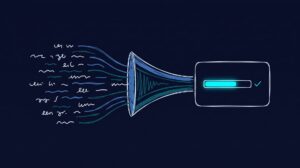
neuroflash Digital Twins is a self-service platform for synthetic audiences built on more than 1,000,000 real survey and profile data points collected since 2017, up to 250 answered questions per twin, used to test LinkedIn posts, CTAs, landing pages, and images before they go live. Aaru is an agentic prediction engine that builds large synthetic populations out of AI agents to forecast how real audiences, consumers, voters, executives, would think and act before a decision is made.[1] Each agent combines census data, licensed behavioral datasets, and an LLM, trained on measurable outcomes rather than stated opinions.[1]
Both promise a faster alternative to traditional research, but at different scales. Aaru has a verifiable track record at population scale: its Dynamo model called a 2024 congressional primary within 371 votes, and EY found its simulated responses correlated at roughly 90% with a real 30-country wealth study.[2][4] neuroflash Digital Twins answers a narrower, everyday question, whether this post, CTA, or image will work for this audience, tested in minutes and plugged into the AI stack a team already runs through API and MCP.
This article compares both on methodology, validation, pricing access, and fit, including the fair point one reviewer put bluntly: calling an election does not automatically transfer to your category, your market, or your audience.[6] See also our comparisons of neuroflash vs. Simile and neuroflash vs. Evidenza, or the Digital Twins market research hub.
Key Takeaways
- Aaru’s Dynamo model predicted the June 2024 NY-16 congressional primary within 371 votes, confirmed by Semafor.[2]
- Aaru replicated EY’s 30-country wealth study at roughly 90% median correlation, a directional figure. Individual questions can miss by 10 to 20 percentage points.[4]
- Aaru’s model gave Harris a 50.5% win probability in the 2024 presidential race, leading in four swing states she lost, a record its co-founder called “within margin of error.”[3]
- Aaru has no public pricing, no documented API, no confirmed free tier, no European office, and no documented German support or EU data residency.
- neuroflash Digital Twins reaches 85-98% prediction accuracy on marketing content, including 98% across 22 Essity claims, vs roughly 55% for generic ChatGPT roleplay, and is free to start.
- Aaru’s “headline” $1 billion valuation rests on a multi-tiered Series A: most of lead investor Redpoint’s stake was priced at $450 million.[8]
How Does Aaru Build Its Synthetic Populations?
Aaru builds its populations from census data, licensed behavioral datasets, and LLMs, forming agents with a demographic profile, media habits, and behavioral traits, trained on measurable outcomes rather than stated opinions.[1] A study defines a target population, introduces a stimulus, a product, message, or ad, and returns the simulated response as an interactive report.
Third-party reporting names two model lines behind Aaru’s single public platform.[6] Lumen targets hard-to-reach enterprise and consumer audiences for product and brand testing; Accenture Song has integrated it.[9] Dynamo handles political forecasting, with agents absorbing new information like a media diet so simulated opinion shifts over a campaign. A self-service layer launched at account.aaru.com in late 2025; it replicated a 3,600-respondent, 30-country EY study in a single day.[4]
No documented API exists, and reviews note access is undisclosed.[6] Enterprise partners embed Aaru instead: Interpublic Group built it into its Acxiom stack via a joint “Simulation Studio.”[10] No public pricing exists either; Aaru is sales-led with no confirmed free tier.
What Does Aaru’s Election Track Record Actually Show?
Aaru’s election record shows a genuine hit and a genuine miss. In June 2024, Dynamo simulated the NY-16 Democratic primary with roughly 5,000 agents and landed within 371 votes of the result, independently confirmed by Semafor, a hard, adversarial, checkable test.[2]
The 2025 New York City mayoral race needs more care. Fortune wrote that Aaru simulated close to 2 million voters and came within roughly 2,000 votes of the final count.[3] The city’s June primary drew about 1.03 million votes; the November general election drew 2,055,921, matching Fortune’s figure.[11] Reporting does not clarify which contest the claim describes, so the fairest reading is that Aaru landed within roughly 2,000 votes on the 2025 race, with coverage inconsistent on primary versus general.
The 2024 presidential election is the other side. Days before the vote, Aaru’s model had Harris ahead in four swing states at a 50.5% win probability. Trump won. Co-founder Cameron Fink called it “within margin of error,” a defense Nate Silver rejects, since that concept is built for weighted human samples, not agents.[5] Silver argues synthetic surveys model what a survey would show and are structurally weak at catching real opinion shifts in hard-to-reach groups, a fair caution for content work too.[5] FishDog puts it directly: calling an election does not automatically transfer to your category, your market, or your audience.[6]
Aaru was founded in 2024 by Cameron Fink, Ned Koh, and CTO John Kessler, and runs offices only in New York and Singapore.[3] It has raised roughly $88 million total; the $1 billion figure attached to its December 2025 Series A, led by Redpoint Ventures, is a headline number, since Redpoint priced most of its stake at $450 million and only later investors paid the $1 billion price, against ARR under $10 million.[7][8]
neuroflash Digital Twins: Testing the Content Decision in Front of You
neuroflash starts from a different question. Instead of forecasting how a population will vote or spend, it builds synthetic audiences from more than 1,000,000 real data points collected since 2017, up to 250 questions per twin, so teams can test the content in front of them. Core capabilities include Chat with your Audience, content tests for posts and CTAs, image feedback through NeuroLens with up to 96% gaze prediction, slogan scoring through NeuroWords, and automated content workflows.
The platform is self-service and free to start at app.neuroflash.com, with DACH roots and a GDPR and EU-hosting focus, in German and English. Results come in minutes rather than the 4-8 weeks classic fieldwork takes. From the Pro plan, API and MCP access lets teams query twins from ChatGPT, Claude, Copilot, and Langdock. neuroflash functions as the digital twin research layer that plugs into whatever AI stack a team runs, rather than as its own chatbot or an alternative to the LLMs it connects to.
neuroflash vs. Aaru at a Glance
| Criterion | neuroflash Digital Twins | Aaru |
|---|---|---|
| Data Basis | 1,000,000+ real survey/profile data points since 2017, up to 250 questions per twin | Census data, licensed behavioral datasets, LLM agents[1] |
| Methodology | Proprietary twin modeling on structured survey/profile data | Agent-based: Lumen for enterprise/consumer, Dynamo for political forecasting[6] |
| Accuracy/Validation | 85-98% in customer pilots (98% on 22 Essity claims), 80+ studies, vs ~55% generic ChatGPT | NY-16 within 371 votes; EY study ~90% median correlation, directional; missed 2024 presidential race[2][4] |
| Use Cases | Marketing content: posts, CTAs, landing pages, images, slogans | Population-scale prediction: elections, policy, product launches, brand testing[9][10] |
| Pricing/Access | Self-service, free to start | No public pricing, sales-led enterprise only |
| Target Customer | Marketers and content teams of any size | Large enterprises, agencies, campaigns with substantial budgets |
| Languages/EU | German and English, GDPR/EU-hosting focus | No documented German support or EU data residency; offices only New York, Singapore |
What Does the EY Study Really Tell You About Aaru’s Accuracy?
The EY study shows Aaru’s directional accuracy at population scale. Aaru replicated EY’s Global Wealth Research Report 2025, 3,600 respondents, 30 countries, 53 questions, in one day at roughly 90% median correlation with real fieldwork.[4] Individual questions can still diverge by 10 to 20 percentage points, so the figure describes pattern match rather than single-question precision.
One example makes it concrete. EY’s human respondents said 82% would keep their parents’ wealth manager, a figure known to overstate real retention, closer to 20-30%. Aaru’s simulation predicted around 40%, closer to reality than the stated intent, though still well off the actual number.[4] That directional strength, paired with weaker single-question precision, matters most for fine-grained A/B testing of specific ad copy.

When Is Aaru the Better Choice?
Aaru is the better choice for organizations running population-scale prediction with a substantial enterprise budget, especially in politics, policy, and market-wide forecasting. Its strongest, most checkable results sit there: a primary called within 371 votes, an EY validation partnership, and workflow integrations with Accenture Song and Interpublic Group.[2][4][9][10] For studying how hundreds of thousands of people will behave, Aaru’s scale and speed, a full study in a day at roughly a tenth the cost of classic fieldwork per Semafor, are a real advantage.[2]
Aaru also deserves credit for candor rarely seen in this category. Co-founder Ned Koh reportedly tells prospects, “Do not trust us. Do not trust our model,” urging them to verify results independently.[3] With the budget for a sales-led process and a genuinely population-scale job, Aaru is a serious option.
When Are neuroflash Digital Twins the Better Choice?
neuroflash Digital Twins are the better choice when the question is concrete: will this post, CTA, image, or claim work for the audience you are trying to reach. There is no sales cycle. Start free at app.neuroflash.com and see results the same day, with 85-98% prediction accuracy on marketing content in customer pilots, backed by 80+ academic studies. If your workflow runs through ChatGPT, Claude, Copilot, or Langdock, API and MCP access from the Pro plan puts twins directly inside it.
In the same spirit of fairness applied to Aaru above, forecasting an election or modeling a national population is Aaru’s ground, and it has earned it. neuroflash’s ground is the specific content decision a marketing team makes every week.
How neuroflash Digital Twins Fit Into Your Testing Workflow
Before a post, CTA, or campaign goes live, Digital Twins show you how your actual audience is likely to react, built on more than 1,000,000 real profiles and reaching 85-98% prediction accuracy in customer pilots, against roughly 55% for generic ChatGPT roleplay, validated across 80+ academic studies. Instead of a sales call and a multi-week engagement, you get a read in minutes.
Because twins are accessible through API and MCP from the Pro plan, they integrate directly into the AI stack your team already uses, ChatGPT, Claude, Copilot, or Langdock, so audience feedback becomes part of the content workflow itself.
Start for free at app.neuroflash.com and test your first piece of content today. No sales call required.
- 1,000,000+ real profiles, up to 250 questions per twin
- 85-98% prediction accuracy in customer pilots vs ~55% generic ChatGPT roleplay
- 80+ academic studies validating the methodology
- Results in minutes instead of 4-8 weeks of classic fieldwork
- API/MCP integration into ChatGPT, Claude, Copilot, and Langdock

FAQ
Did Aaru actually predict an election correctly?
Yes, at least once with strong confirmation. Aaru’s Dynamo model predicted the June 2024 NY-16 primary within 371 votes, confirmed by Semafor.[2] Its record is mixed overall: the 2024 presidential race was a clear miss, with the model giving Harris a 50.5% win probability days before Trump won.[5]
Is Aaru’s accuracy on elections the same as for marketing content?
No. Its best-documented results are in political forecasting. Marketing and brand testing through Accenture Song and Interpublic Group are newer applications with no independent accuracy study of their own.[6]
Is neuroflash Digital Twins free to start?
Yes. Create an account at app.neuroflash.com and start testing content without a sales process. API and MCP access is available from the Pro plan.
Can neuroflash Digital Twins connect to ChatGPT or Claude?
Yes. From the Pro plan, twins can be queried directly from ChatGPT, Claude, Copilot, Langdock, or custom agents in your workflow.
Does Aaru support German or offer EU data residency?
There is no public documentation of either. Aaru’s confirmed offices are New York and Singapore, and the only privacy signal on its site is a linked Data Processing Agreement, not the same as EU market presence or hosting.
My Take
Reading through Aaru’s public record, the detail that stands out most is the 371-vote margin on NY-16, not the $1 billion headline. Plenty of AI startups claim to predict things; very few publish a specific, independently confirmed number that close to reality on a real, adversarial event. That, plus the EY partnership and the Accenture and IPG integrations, tells me Aaru is doing something real at population scale, and the “do not trust us” line from its own co-founder is honesty worth respecting.
Most teams evaluating digital twins this week are not forecasting a congressional primary, though. They want to know whether a specific post, image, or claim will land with a specific audience, without a sales cycle or an undisclosed price tag. That is the job neuroflash Digital Twins is built for: start free, test the actual content, and plug the result into the AI tools already running.
References
[1] Aaru (2026): “Aaru Products and Methodology.” https://aaru.com/products
[2] Semafor (2024): “AI Startup Aaru Uses Chatbots Instead of Humans for Political Polls.” https://www.semafor.com/article/09/20/2024/ai-startup-aaru-uses-chatbots-instead-of-humans-for-political-polls
[3] Fortune (2026): “Aaru Cofounder Ned Koh on the AI Startup’s Sales Pitch: Do Not Trust Us.” https://fortune.com/2026/06/17/aaru-cofounder-ned-koh-ai-startup-sales-pitch-do-not-trust-us/
[4] EY (2025): “How AI Simulation Accelerates Growth in Wealth and Asset Management.” https://www.ey.com/en_us/insights/wealth-asset-management/how-ai-simulation-accelerates-growth-in-wealth-and-asset-management
[5] Nate Silver (2024): “AI Polls Are Fake Polls.” https://www.natesilver.net/p/ai-polls-are-fake-polls
[6] FishDog (2026): “Aaru AI Review 2026: The Prediction Startup and Where It Fits.” https://fish.dog/news/aaru-ai-review-2026-the-prediction-startup-and-where-it-fits
[7] TechCrunch (2025): “AI Synthetic Research Startup Aaru Raised a Series A at a $1B Headline Valuation.” https://techcrunch.com/2025/12/05/ai-synthetic-research-startup-aaru-raised-a-series-a-at-a-1b-headline-valuation/
[8] TechCrunch (2026): “Why AI Startups Are Selling the Same Equity at Two Different Prices.” https://techcrunch.com/2026/03/03/why-ai-startups-are-selling-the-same-equity-at-two-different-prices/
[9] Accenture Newsroom (2025): “Accenture Invests in and Collaborates with AI-Powered Agentic Prediction Engine Aaru.” https://newsroom.accenture.com/news/2025/accenture-invests-in-and-collaborates-with-ai-powered-agentic-prediction-engine-aaru
[10] MarketingDive (2026): “IPG Partners with Aaru for AI-Powered Consumer Simulations.” https://www.marketingdive.com/news/ipg-partners-with-aaru-for-ai-powered-consumer-simulations/757277/
[11] City & State New York (2025): “5 Takeaways from the 2025 NYC Election Turnout.” https://www.cityandstateny.com/politics/2025/11/5-takeaways-2025-nyc-election-turnout/409413/